Snail shells offer slow and steady map of past weather
Andrew Stafford |
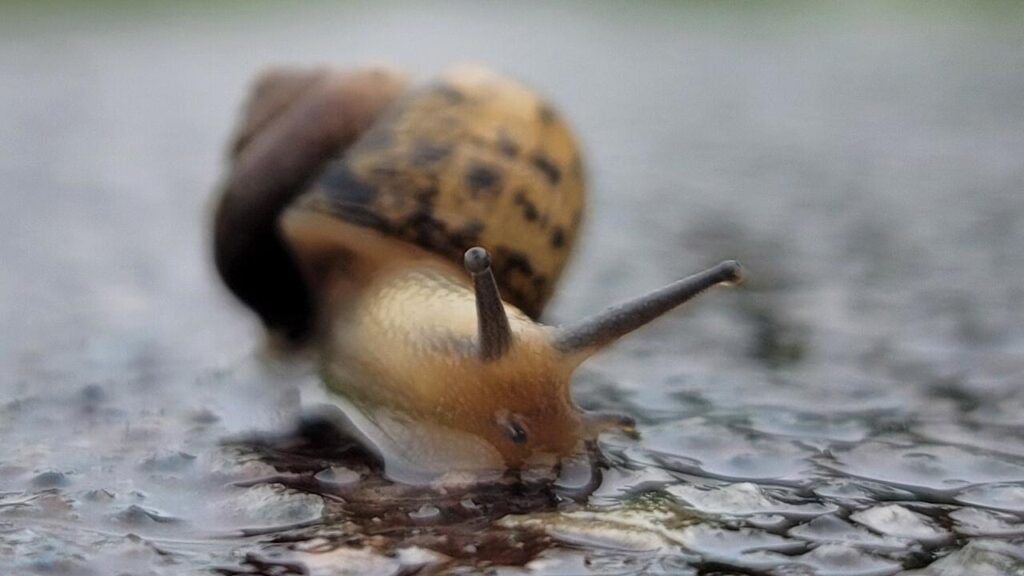
An innovative analysis of a single snail’s shell has revealed the slow-moving creatures carry a weight of history on their backs, possibly including evidence of prehistoric cyclones.
A University of Queensland study has discovered shells can detail not only a snail’s age but also where they lived and the weather during their lifetime.
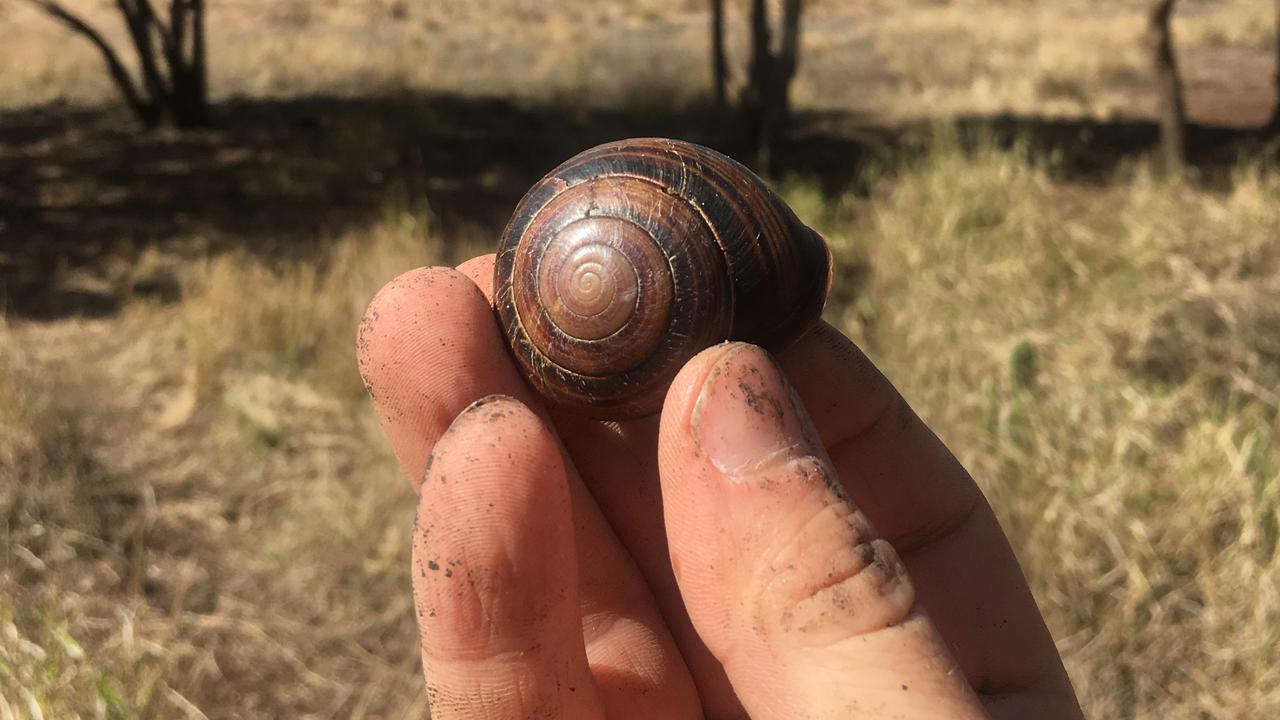
Researchers analysed the rings on the shell of a Biggenden banded snail from Coalstoun Lakes National Park in southeast Queensland.
High-resolution radiocarbon dating was used to determine the age of the growth bands in the shell, revealing insights into the rainfall the snail experienced during its four-and-a-half-year lifespan.
Instead of growing continuously, there were growth spurts associated with two extreme rainfall events caused by Tropical Cyclone Marcia, in 2015, followed by Tropical Cyclone Debbie in 2017.
These growth spurts were interspersed with periods of very slow or no growth.
Honorary Professor Jamie Shulmeister said it showed that snail shells could be used to map extreme weather events for periods before modern meteorological records.
“It’s quite exciting that the humble snail could be a tool to reconstruct the paths of past cyclones even in prehistoric times,” he said.
Prof Shulmeister told AAP that after a big wet season, snails “literally have a massive buffet dinner, they grow rapidly, and then they stop again in the aftermath”.
“The reason why this is important is that it demonstrates that you can actually use these snails to reconstruct past individual rainfall events.”
Examining unearthed snail shells from the geological past would provide greater insight into the climate of the past, Prof Shulmeister said.
“In order to know what the risk is for the future, what we don’t have is good archives that say, for example, how long do droughts last?” he said.
He said it was possible that droughts in the past lasted many decades, or even centuries.
“If you’re planning for risk in the future, understanding that is critical to getting good management,” he said.
AAP