Pacific pushback but no condemnation over China missile
Ben McKay |
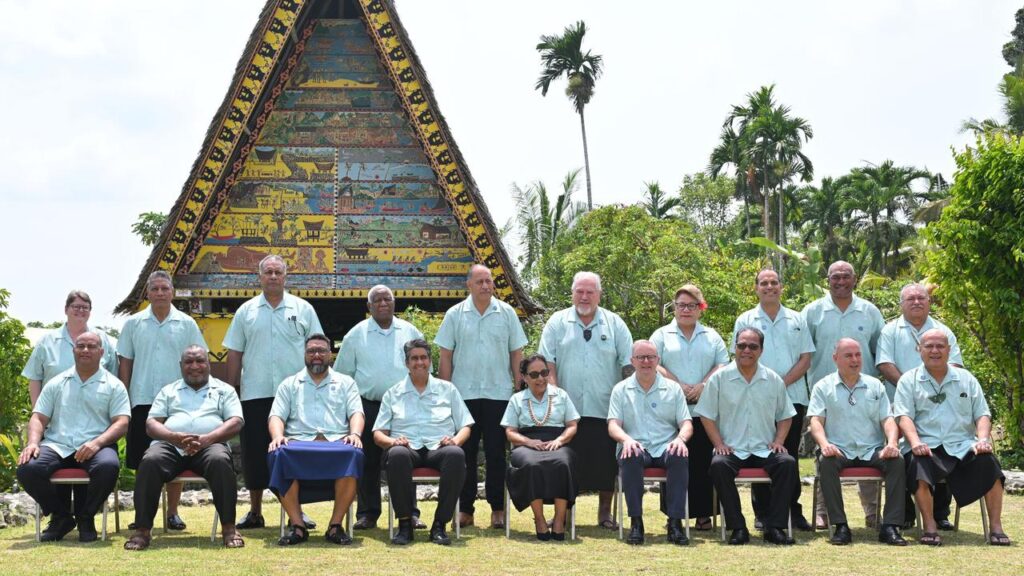
The Pacific Islands Forum has found a way through its consensus decision-making style to register concern at China’s illegal missile test.
In doing so, it might have shown a glimpse of how it could break future impasses which have blighted the organisation.
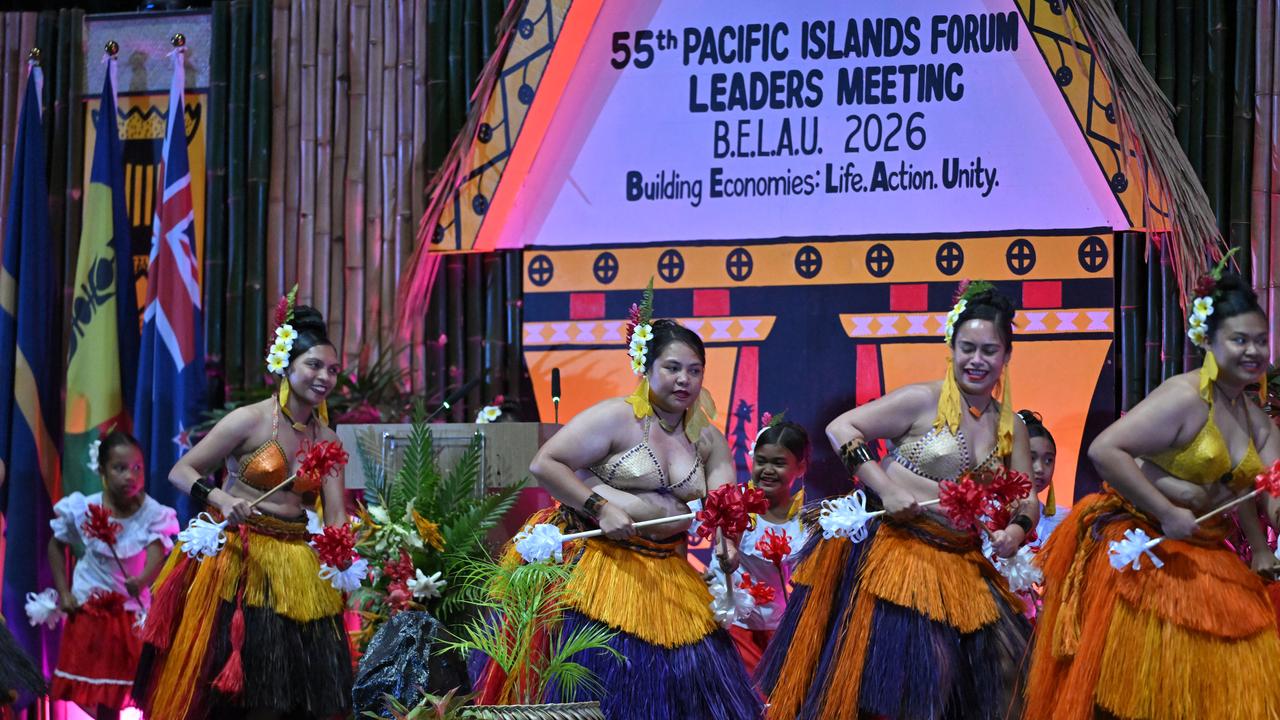
The annual leaders summit wrapped up on Thursday in Palau, where Anthony Albanese and other Pacific representatives gathered for the leaders retreat.
Key decisions at the 2026 event included splitting its external partners into a two-tiered system, and adding a new annual police ministers gathering to the regional calendar.
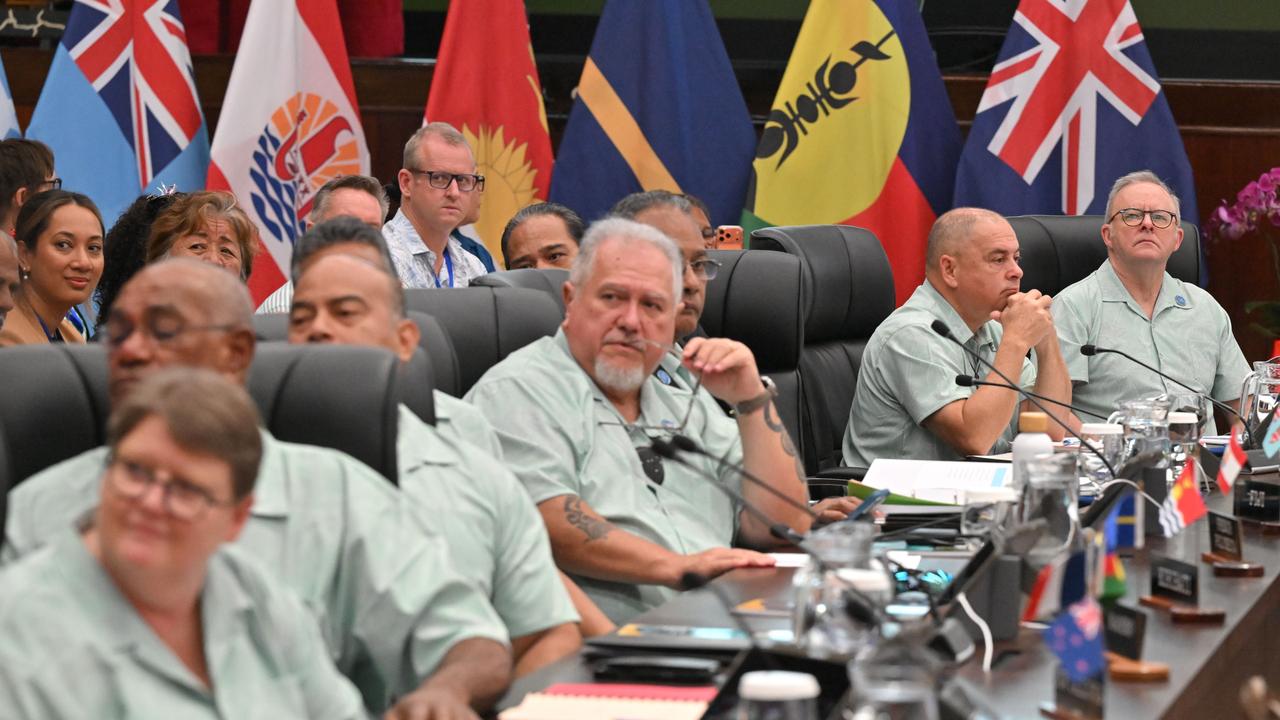
The week in Palau has been flavoured by geopolitical competition between China and the west, including high-profile diplomacy by Taiwan, an ally of the Micronesian host nation.
One of the biggest talking points was whether leaders might back a regional response to China’s nuclear-capable inter-continental ballistic missile test in July.
The dummy missile flew over the Philippines, Palau and Micronesia’s airspace – without warning – before landing in the Pacific Ocean.
Several nations have criticised the test, just the second since 1980, but PIF as a collective failed to do so at a foreign ministers meeting last month.
That was due to PIF’s preference to make decisions by consensus: and on that occasion, Nauru and Kiribati opted to block the statement.
In Palau, whether leaders could come to a different standpoint shaped as a litmus test for both PIF and each members regarding their positioning.
The communique, released on Friday, references the Fiji-led Ocean of Peace declaration last year, which states the region should be free from coercion and militarisation.
However, it doesn’t identify China by name, nor use heftier diplomatic language than “concern”.
“Recalling the Blue Pacific Ocean of Peace declaration, leaders registered concern about the recent inter-continental ballistic missile (ICBM) test which overflew a number of members without adequate notice,” the relevant clause read.
“Leaders call on all states undertaking ICBM testing to provide transparency and provide reassurance, including through provision of advanced notification of at least 24 hours in accordance with international practice.”
In a rare move for the forum, Nauru dissented from the clause, while Kiribati reportedly did not attend.
Respected Pacific analyst Richard Herr said it was significant.
“It kept the paragraph in the communique and it may be a useful sign of some pragmatism being built into the forum,” he told AAP.
“It shows there is a way for states who really don’t want to be seen as antagonising China – or any other country for that matter – to express their views.”
Climate Minister Chris Bowen, part of Australia’s delegation, said unanimity was preferable, but not necessary.
“It’s perfectly reasonable … for one or two to say they have a different view. The view of the overwhelming bulk of the Pacific was made crystal clear,” he told the ABC.
On Thursday, President Surangel Whipps said China’s test was provocative and threatening.
“They never bothered to tell us that’s what’s happening,” he said.
“I said ‘there’s a lot of space between Japan and Guam, why don’t you send it there? Why does it have to come to the middle of the Pacific when last year we just signed a declaration of peace?'”
In other decisions, PIF will categorise external powers, currently known as “dialogue partners” as either strategic or sector partners.
The 13 strategic partners will be China, the US, France, Germany, the UK, the EU, Canada, Japan, India, Indonesia, Singapore, South Korea and the UAE.
Only those partners will be able to attend leaders meetings, while junior partners will be referred to the annual foreign ministers gathering.
A proposal to bring the Australia-backed Joint Heads of Pacific Security (JHOPS) under the Pacific Islands Forum has also won a level of support.
The summit was also notable for big-spending pledges from Australia and the United States.
Australia promised $600 million towards trans-national crime prevention, and the United States pledged over $200 million towards a variety of projects.
AAP