Germany accuses Russia of Leipzig airport drone attack
|
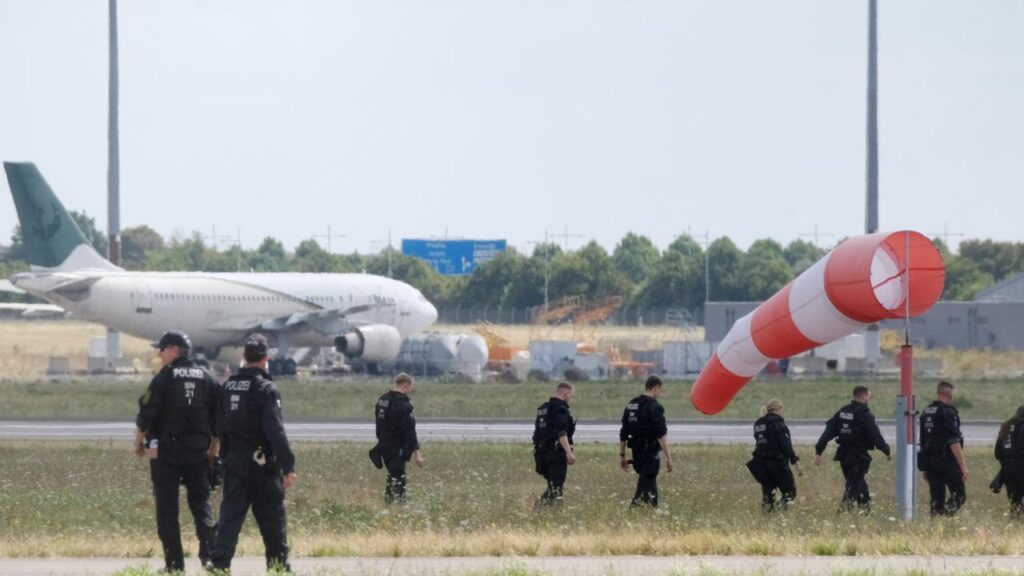
The German government says it assesses that Russia was responsible for an attempted drone attack at Leipzig/Halle airport last month and ordered a series of measures in response including the closure of a consulate and a Russian cultural centre in Berlin.
Interior Minister Alexander Dobrindt said intelligence findings indicated that individuals involved in the attack were acting on behalf of Russian state agencies.
“Taken together, police investigations, patterns of the offences and intelligence findings establish Russian responsibility for the attempted attack at Leipzig Airport,” he said.
Dobrindt said the technology found at the scene and the interplay of individual elements had to be described as professional, and indicated a high degree of technical expertise and considerable organisational effort in the planning and execution of the attack.
“The final execution of the attempted attack can be attributed to the area of low-level agents,” he said, adding: “Let me make this clear: we are not at war but we are a daily target of hybrid warfare.”
Standing alongside Dobrindt, Foreign Minister Johann Wadephul said Germany did not view Leipzig as an isolated incident.
“It fits into a broader pattern of Russian hybrid operations in Europe,” he said.
A drone fitted with explosives and a detonation mechanism was discovered on the evening of August 4 in the security zone of Leipzig/Halle Airport, between Ukrainian cargo aircraft, prompting a temporary halt to flights.
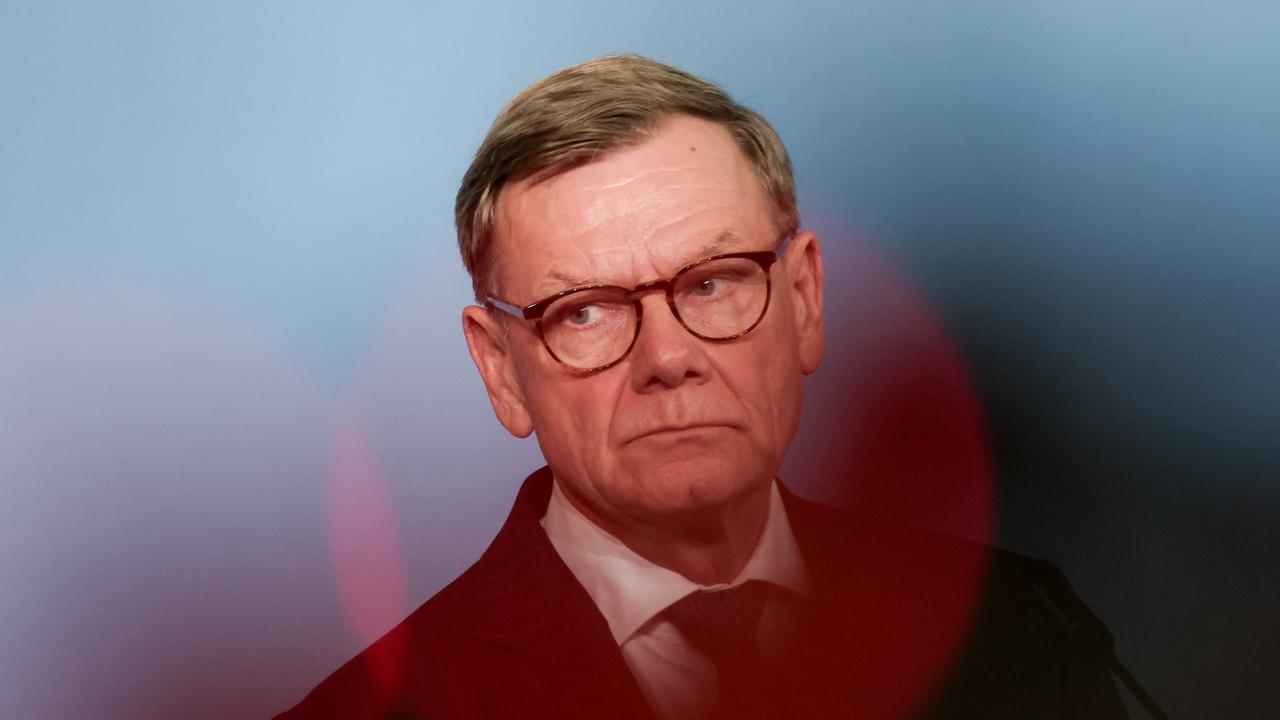
In response to the attack, Wadephul said on Tuesday Germany would take a series of measures including closing Russia’s consulate general in Bonn and terminating its agreement with the Russian House cultural centre in Berlin.
“Germany remains secure, and Germany will defend itself against adversaries who seek to create insecurity,” Wadephul said.
“We will not allow Russia’s attacks to divide or intimidate us in our social cohesion.”
Germany will also push within the European Union for additional sanctions listings and travel restrictions on Russian citizens while increasing pressure on Russia’s “shadow fleet,” he said.
Responding to Germany’s announcement, Russian foreign ministry spokeswoman Maria Zakharova said her country would respond to what she called Germany’s “anti-Russian action,” according to Interfax news agency.
Russia would respond “in kind” to any new German sanctions, Zakharova told the DPA news agency.
The Russian embassy in Berlin had previously dismissed such accusations as “fabricated provocation” and as “a new wave of anti-Russian hysteria in Germany”.
European Commission President Ursula von der Leyen said she would discuss the attack on Wednesday with NATO Secretary General Mark Rutte, and European Union foreign ministers would prepare a joint response.
“Russia is seeking to sow distrust and fear among our societies. But it will fail. And we will stand by Ukraine for as long as it takes,” von der Leyen posted on X.
Rutte welcomed the measures Germany plans to take following the discovery of an explosive drone at Leipzig airport, posting on X on Tuesday evening: “The evidence is clear.”
Rutte said the NATO military alliance stood in full solidarity with Germany.
“Looking forward to discussing collective countermeasures at the Gymnich meeting in Ireland tonight and tomorrow,” Polish Foreign Minister Radoslaw Sikorski said on X.
“Full solidarity with Germany.”
Prime Minister Andy Burnham said in a statement that the United Kingdom stood with Germany and that any Russian attempts to undermine support for Ukraine were “doomed to fail”.
with DPA and AP
Reuters