US launches new strikes on Iran around Strait of Hormuz
|
The United States has launched new air strikes on Iranian targets, quashing hopes that an exchange of fire last weekend might not presage a wider renewal of hostilities.
Oil prices had already risen after that first exchange of direct attacks since July and after reports of two tankers being hit leaving the Strait of Hormuz, the global oil supply waterway that Iran has effectively closed to shipping.
Iran remained defiant, warning that it would prevent oil being exported from the Gulf.
“Today at 12pm ET, US forces began striking Islamic Revolutionary Guard Corps (IRGC) targets in Iran,” US Central Command posted on X.
“The strikes follow recent attempted attacks by the IRGC against commercial shipping in the Strait of Hormuz and against American service members deployed to the region.”
US President Donald Trump said the latest US attack on Iran was “justified” and threatened bigger strikes if Iran retaliated.
Trump, in a Truth Social post, said the US military was striking Iranian targets near the Strait of Hormuz on Tuesday in retaliation for Iran’s “failed attempt at adding sea mines” to the strait and for shooting eight missiles at a US military base in Jordan.
Iran’s state broadcaster said there had been reports of explosions on Iran’s Qeshm Island, on the northern side of the strait.
Nour News said there had been reports of explosions in the port city of Bandar Abbas and in Chabahar, a port on the southern coast.
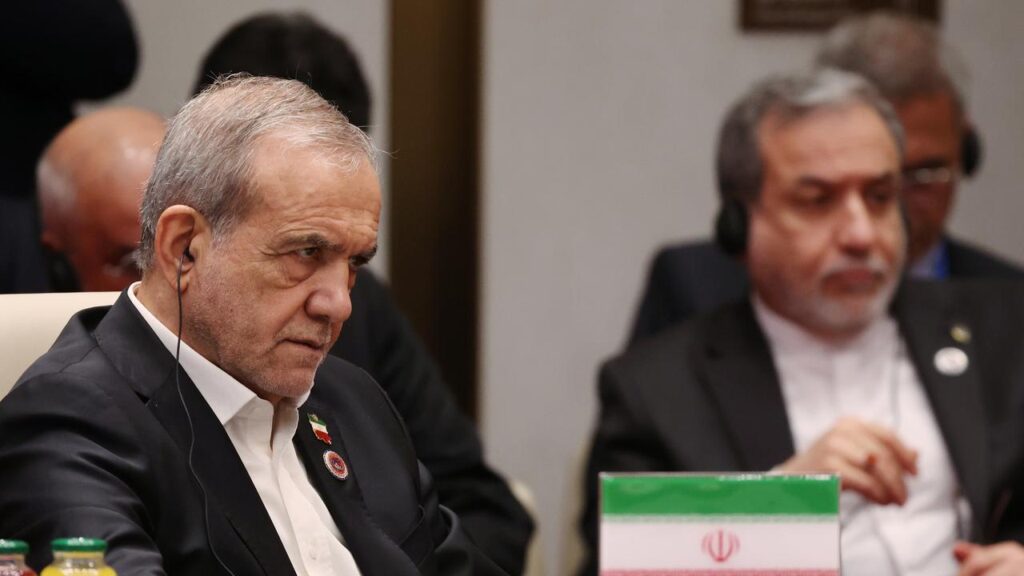
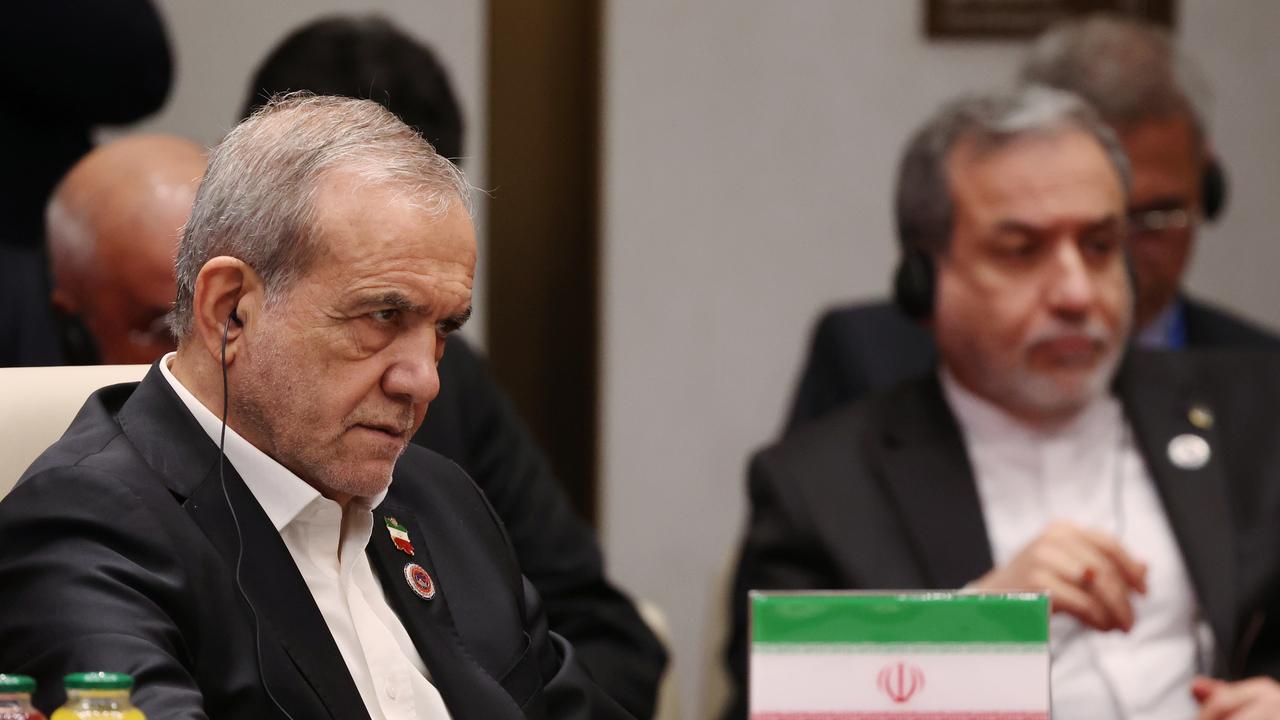
Earlier on Tuesday, Iranian President Masoud Pezeshkian accused the United States of reneging on a June agreement with Iran but offered to reciprocate if the US honours its commitments.
“If the US returns to its obligations in the aforementioned memorandum of understanding, the Islamic Republic of Iran will immediately reciprocate,” Pezeshkian said at a summit of the Shanghai Co-operation Organisation (SCO) in the Kyrgyz capital Bishkek, according to Iran’s IRNA news agency.
Pezeshkian said that about three months of negotiations mediated by Pakistan and Qatar had led to the interim agreement, known as the Islamabad Memorandum of Understanding.
However, he accused the US of soon abandoning its commitments.
“The US commitment to the document signed by the president of that country lasted less than two weeks, and that country’s excessive demands and reneging on its commitments began, which still continues,” Pezeshkian said, according to IRNA.
He said Iran had responded proportionately to what he described as US violations of the June memorandum.
In the memorandum, Iran agreed to clear the Strait of Hormuz of mines and allow ships to pass while the US agreed to end its naval blockade, lift sanctions, issue waivers for Iranian oil exports and begin work on a reconstruction package for Iran.
Diplomatic efforts to bring the war to an end are at an impasse.
Last month, a 60-day deadline set out in June’s preliminary agreement for the two sides to reach a final peace deal, including on Iran’s nuclear program, expired.
Regional powers launched a fresh diplomatic push last week, with delegations from mediators Pakistan, Qatar and Oman travelling to Tehran for talks.
But major points of contention remain unresolved, including the Strait of Hormuz shipping route.
There was a renewed military escalation in the Gulf over the weekend, with the two sides exchanging attacks for the first time in about a month.
Meanwhile, Iran’s armed forces said they have deployed air defence units at more than 3800 locations across the country.
“Many of these sites are in difficult-to-access areas. Iran is a country with diverse geographical conditions, and air defence forces are stationed in deserts, on coasts, on islands and in mountainous areas,” an Iranian general told state television.
About 160 Iranian air defence personnel have been killed in military conflicts with the US and Israel since October 2024, according to Second Brigadier General Mohammad Sadeghian.
with AP and Reuters
DPA