Push for pen and paper tests as literacy results dive
Lucinda Garbutt-Young and Noah Secomb |

A return to pen and paper testing is among the options being considered by education ministers in a bid to correct plummeting literacy and numeracy results.
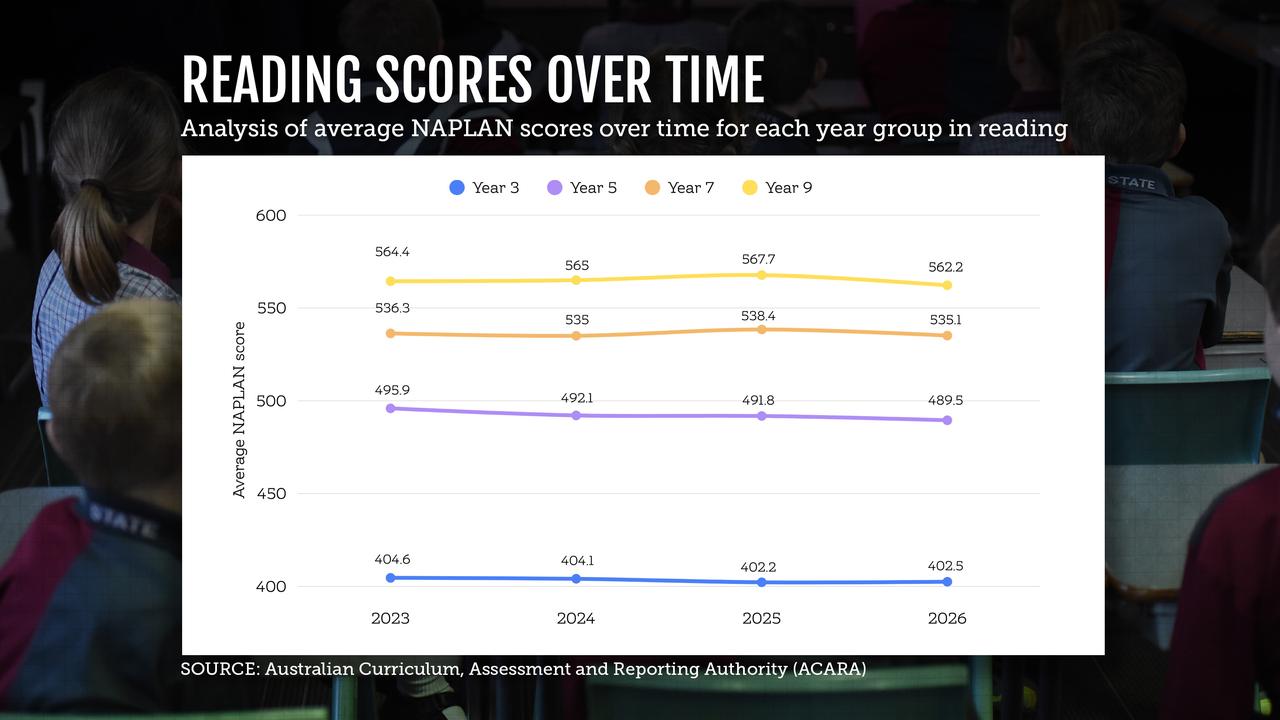
Around one in three students across all levels did not meet basic benchmarks in the latest National Assessment Program – Literacy and Numeracy (NAPLAN) tests.
Scores for reading were worse than 2025 for every grade level, and year 5 students were the only group whose writing ability had approved.
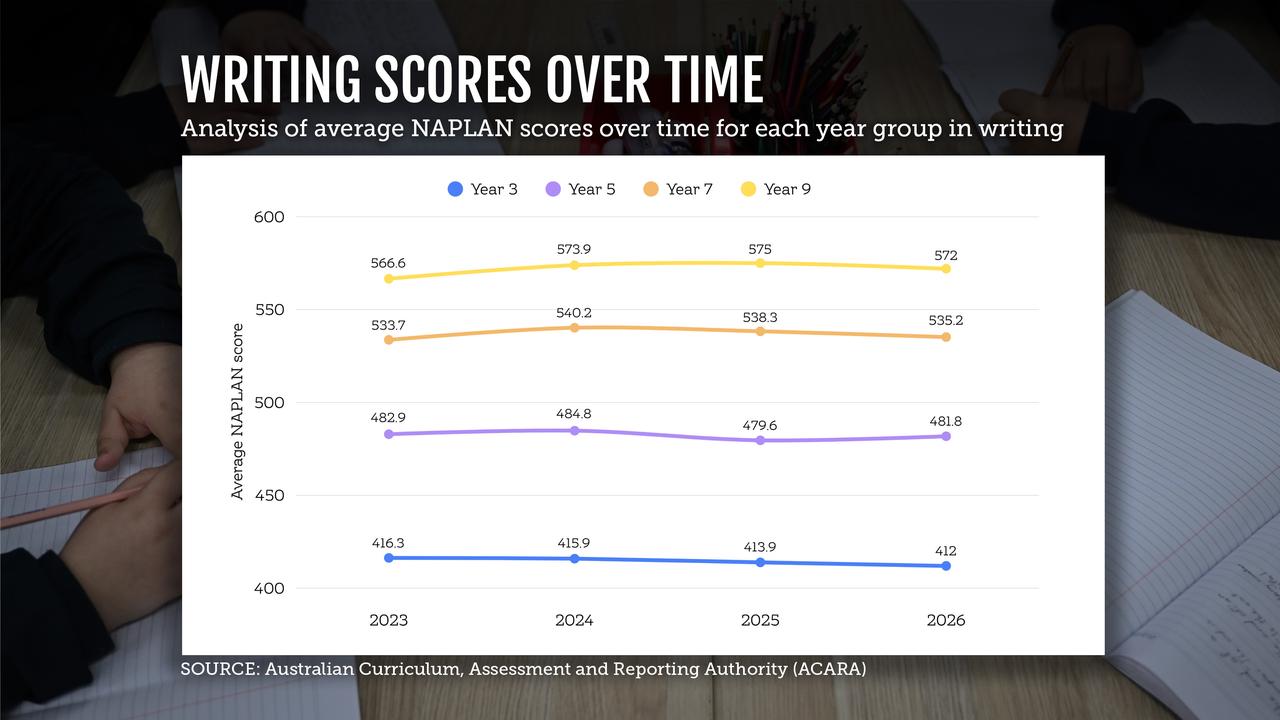
Education Minister Jason Clare said the impact of screens and social media on students could be part of the problem.
“Some of the writing results today make me wonder whether young people today are spending so much time writing texts, short messages rather than long form paragraphs that it’s having an impact on their writing,” he told reporters in Sydney on Wednesday.
The NAPLAN tests were fully digitised in 2022 except for year 3 writing exams and for students with special needs.
A technical glitch on day one of NAPLAN testing in March raised concerns around the accuracy of the data.
ACARA, the government body responsible for rolling out NAPLAN, said the server error didn’t have an obvious or real impact on the writing test.
NSW Education Minister Prue Car said the full impact of computer-based exams had not been realised.
She said digital NAPLAN exams are pushing some schools to introduce computers into the curriculum earlier.
“I’m really keen to see what comes back about pen and paper because I think that it may show that that may be a good way forward,” Ms Car said.
The writing scores were a particular concern in the two lowest grades tested, in which less than 10 per cent of students were exceeding national benchmarks.
Numeracy results had improved for most cohorts since 2025, though the score for year 3 had decreased.
University of Sydney secondary mathematics expert Bronwyn Reid O’Connor urged parents not to be alarmed by falling year 3 maths results which she said weren’t statistically significant.
“Mathematics is a field where we’re using mass notation, we’re drawing diagrams, we’re creating graphs, we’re showing working out, we’re annotating diagrams, we’re switching between these different types of representations,” Dr Reid O’Connor told AAP.
She said digital testing applied to all of NAPLAN misses a lot of the nuance taught in classrooms.
Dr Reid O’Connor said moving the students from tangible experiences to develop understanding of number concepts onto a digital platform was “a very different world for many of them”.
Access to a computer outside of school remains a barrier for many low-income households, according to The Smith Family chief executive Doug Taylor.
“When we look at the 72,000 students that we support, 44 per cent of those students don’t have a digitally connected laptop at home,” he said.
“Now that’s not their own laptop. I’m talking about there being no laptop at home that’s digitally connected.”
Results from previous years showed a clear literacy divide between children from wealthy, educated areas and those who grew up in areas of low socio-economic status.
For students like Mark and his mother Ruby, whose last name AAP has agreed not to publish, the latest results have been disheartening.

Mark has ADHD and autism and needs extra support at school.
“When I got the results, because it comes under Mark’s name, he wanted to see his results,” Ruby said.
“In his reading column … it actually said the bottom, bottom.
“I just thought to myself, ‘how could it be right at the bottom when he’s improved so much?’.
“I just wish there was more people, just more at the school to help,” she said.
AAP