Not too big, not too small: $100m to plug renewable gap
Jennifer Dudley-Nicholson |
Smaller renewable energy projects capable of powering several thousand homes will be targeted in a $100 million program launched to address the ”missing middle” of Australia’s energy road map.
Up to 16 hybrid solar and battery projects could secure funding under the scheme announced on Monday by the Climate Energy Finance Corporation.
The projects, which will generate up to five megawatts of electricity, must be ready for construction in 2027.
The announcement comes one week after renewable energy sources broke records to deliver 42.1 per cent of power in the national grid, according to Australian Energy Market Operator, helping to almost halve wholesale power prices on the east coast.
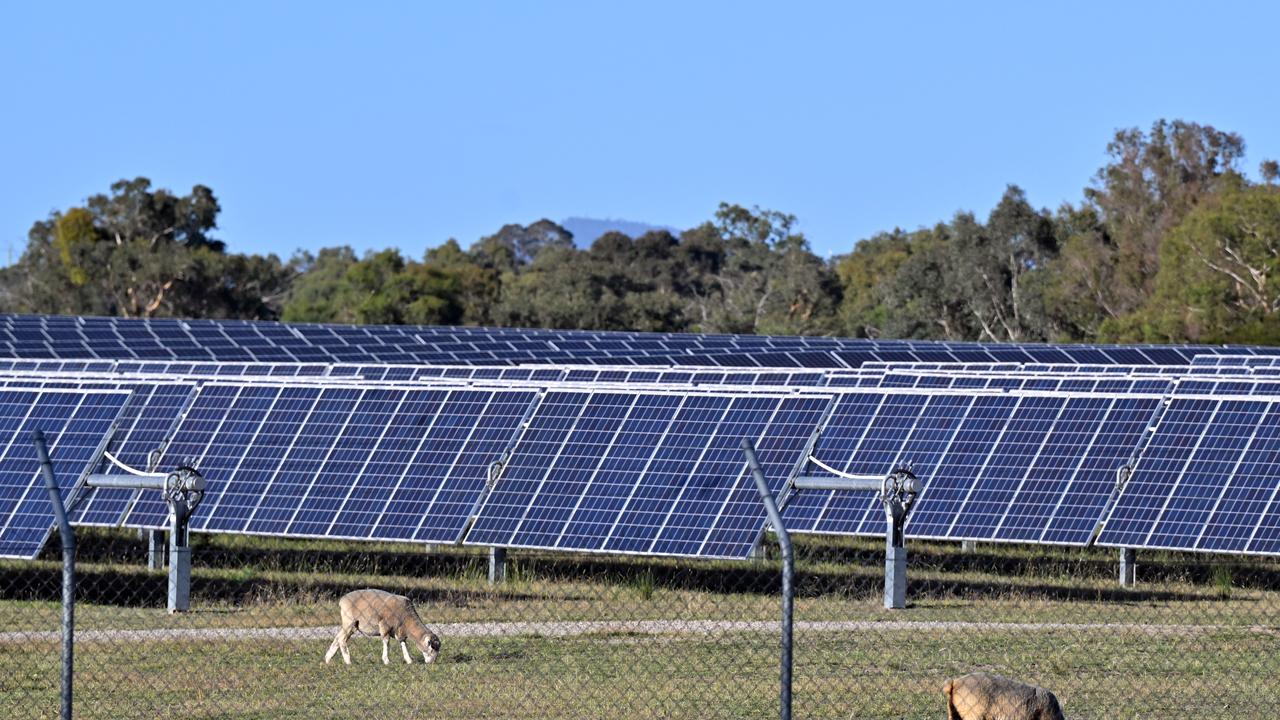
The $100 million initiative, called the Distribution Connected Accelerator Program, will provide concessional loans to small and mid-sized renewable energy projects that have traditionally struggled to secure finance, Energy Minister Chris Bowen said.
”Australians know about rooftop solar and they know about big solar and wind farms,” he said.
”This investment backs the missing middle – projects that can be built faster, connect to local networks, and help deliver cheaper, cleaner electricity.”
Projects up to five megawatts in size would be capable of powering local communities or businesses, while also connecting to the existing power grid without requiring substantial new infrastructure.
Candidates will be shortlisted and managed by debt manager Infradebt, and chief executive Alexander Austin said the projects could play a vital role in speeding up Australia’s move to renewable energy.
”Australia’s energy transition will not be delivered through a handful of mega-projects alone,” he said.
”Smaller, distribution-connected projects have a critical role to play because they can often move from development to operation significantly faster.”
Renewable resources are expected to provide 82 per cent of electricity in Australia’s major grids by 2030, helping to cut greenhouse gas emissions by 43 per cent, according to federal government targets.
AAP