Garma festival shows Yolngu culture in full colour
Robyn Wuth |
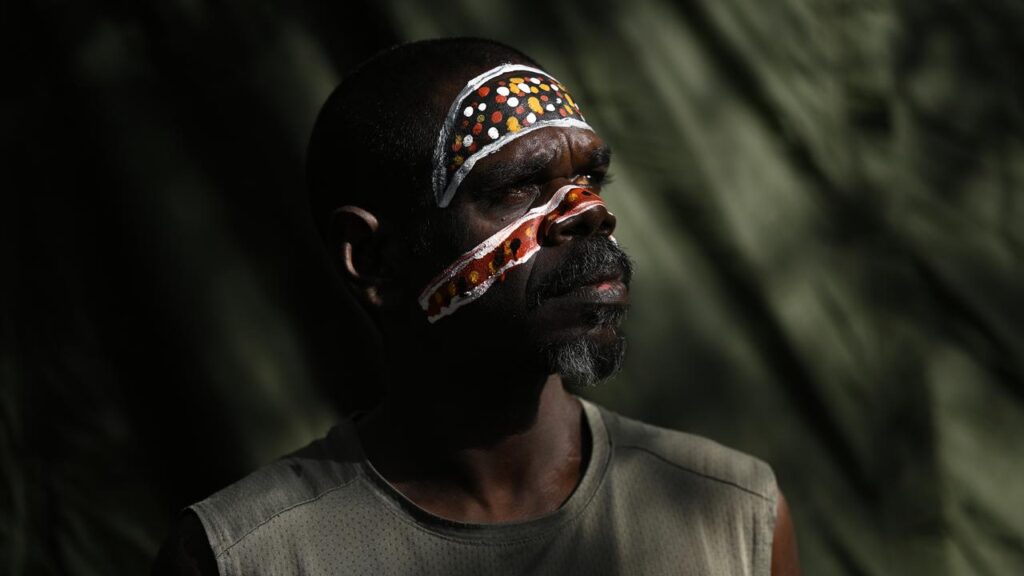
On a red-dust mat in northeast Arnhem Land, Yolngu families gather to show the rest of Australia a culture carried in song, story and white ochre.
Hosted each year by the Yothu Yindi Foundation, the Garma Festival draws traditional owners, political leaders and thousands of visitors to Country to sit and experience their ways.
While much attention focuses on speeches and policy in the Garma Knowledge Centre, the heart of the event beats on the Bungul ground where ceremony unfolds at dusk.
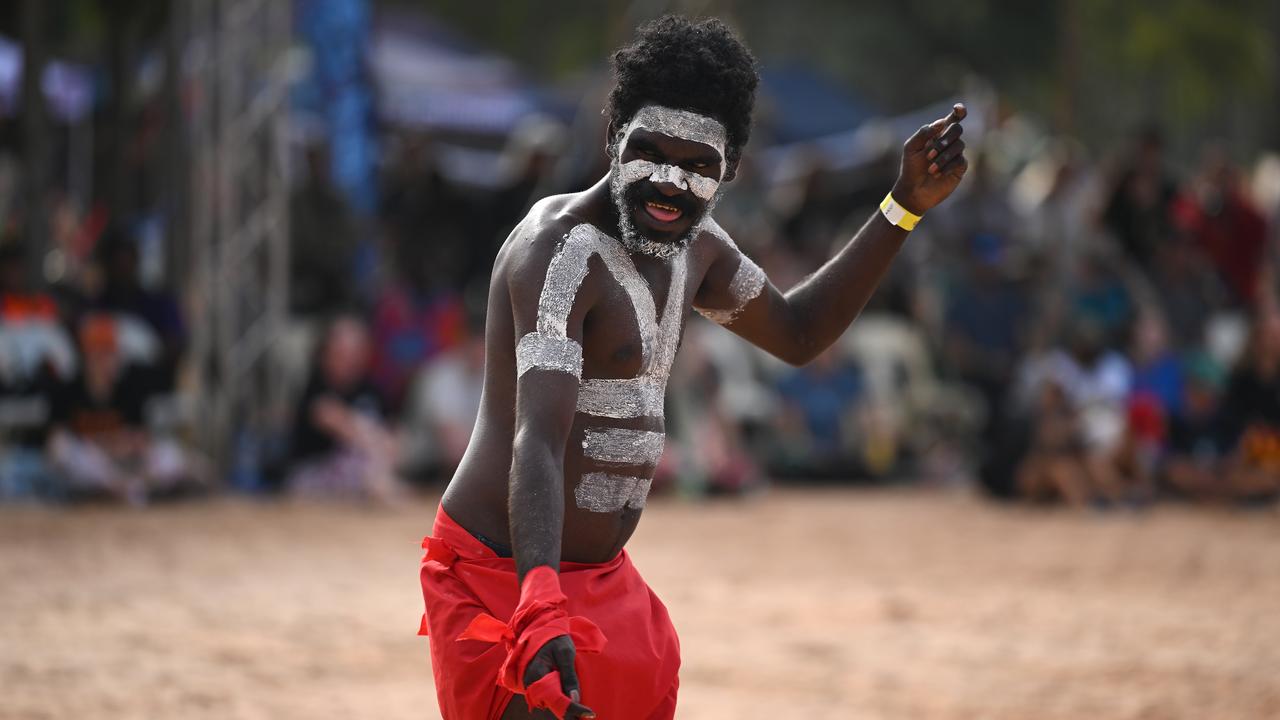
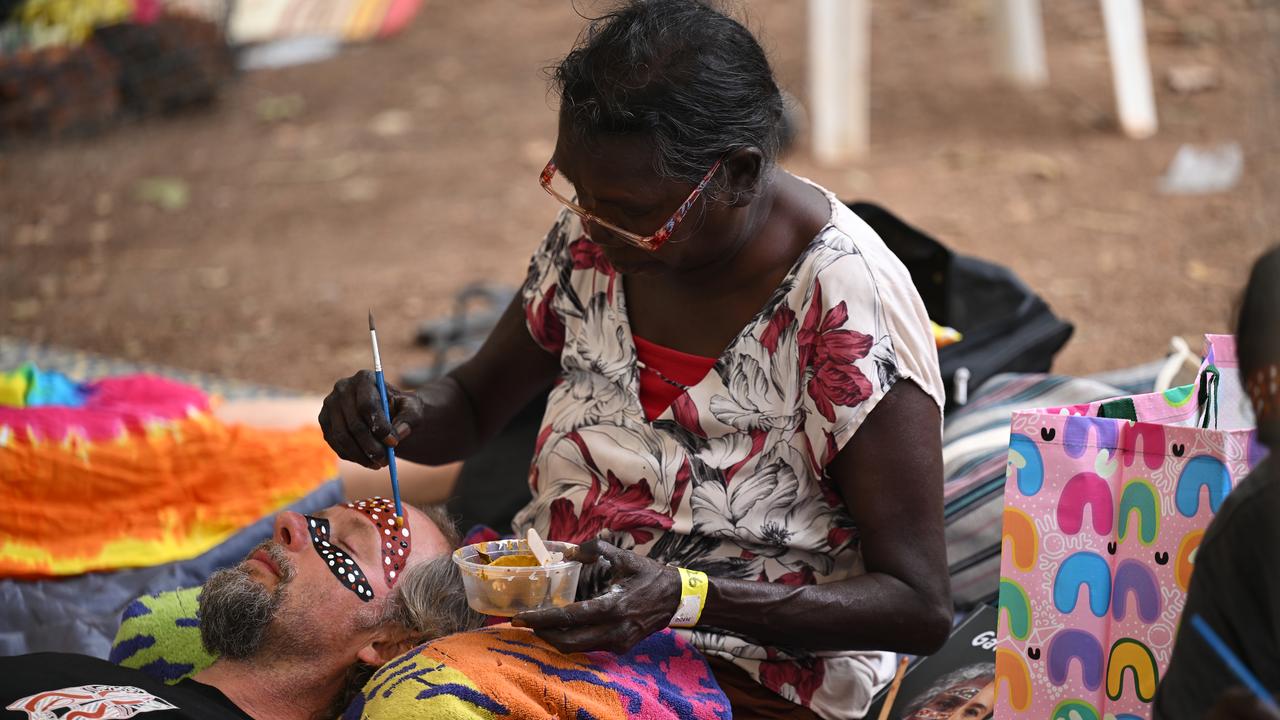
Men, women and tiny children are stretched out on the earth in loose rows as Elders work in silence and amid laughter, dipping fingers into bowls of gapan – white ochre – tracing old designs on young skin.
Holly Gurruwiwi lies still as white ochre is smeared along her arms and across her body, the careful strokes acting as both protection and a visible link to ancestors.
Around her, generations practise the songs and dances they will soon perform, rehearsing steps in the dust as the sun drops and the air cools.
Holly is Wangurri, and on her face the elders paint the Galpu or Rainbow Serpent, its looping form curling across her cheeks and brow.
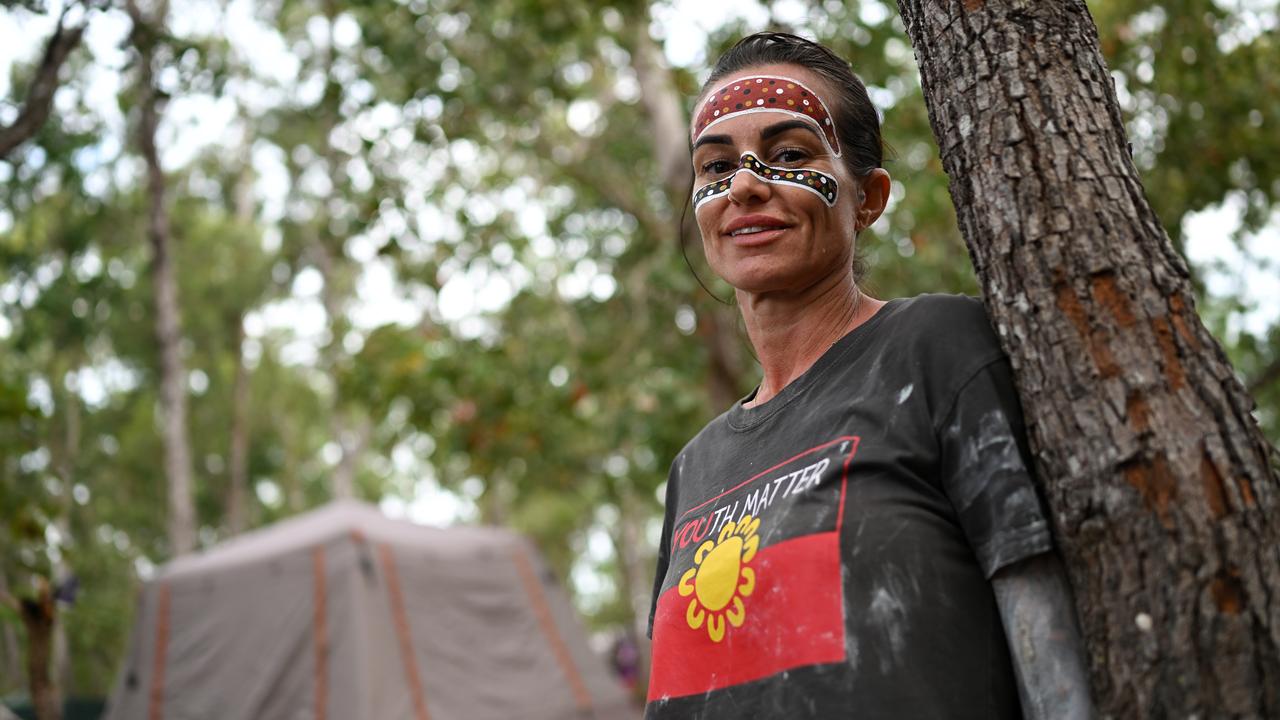
The great ancestral snake is a creator – tied to water, weather and law, a being whose movements in the creation time carved rivers, shaped Country and laid down the rules for how people must live together.
When a person wears designs on their body for ceremony, they are showing their connection to those stories and responsibilities, carrying the power of water, renewal and law onto the Bungul ground.
For Holly, having that story painted on her skin at Garma is also about how her people are seen by the rest of the nation.
“There’s like one narrative out there about Aboriginal people and that’s not the narrative that we know,” she told AAP.
“When the media can cover stories like this about Aboriginal people, it allows Australia to have a balanced view of their decisions and their opinions of us, and I think that’s worthy.”
She says Garma gives Yolngu a chance to show visitors – and the cameras they bring – a side of Aboriginal life that rarely makes the news.
“The good side is not about child protection; it is not about domestic, family and sexual violence; it’s a good story and it’s happy; it is beautiful.”
On the Bungul ground that “good side” looks like laughing children wriggling as they are painted, men standing quietly while designs dry on their chests and grandmothers leaning close to pass on songs.
Holly says she wants Australians watching from afar to understand these ceremonies are not performances for tourists but a continuation of law and identity.
“If Australia knew just how special Aboriginal people are to not only Australia but the whole world … they need to know,” she says.
“We need to honour every human being and their culture and their religions and their beliefs, not berate them for it.”
As the last lines of ochre are pressed into place and the Bungul begins, Holly steps into the dance carrying those words and the Rainbow Serpent, on her face for all to see.
AAP