Tax push renders budget surplus forecasts ‘unrealistic’
Jacob Shteyman |

More tax cuts for workers would keep the budget in deficit beyond the next decade, the agency that assesses the nation’s finances warns.
The outlook for the federal budget has improved over the past year, despite economic headwinds from the Middle East, but the independent Parliamentary Budget Office said the projection of a return to surplus within a decade was under threat.
The budget office projected the $31.5 billion deficit to shrink modestly by 2029/30 and return to surplus from 2034/35, in its Medium-Term Budget Outlook report on Tuesday.
But that assumes no changes to policy settings, including that programs due to terminate are not extended and public service expenditure is not cut, as the budget has forecast.
That would result in Australians paying an extra $336 billion in personal income taxes each year, an increase of 86 per cent.
“Historically, these assumptions have not been realised, with governments typically announcing further tax cuts as well as additional expenditure associated with new or extended programs,” the report said.
If the government introduces more personal tax cuts to return bracket creep to workers, as has been foreshadowed by Treasurer Jim Chalmers, the budget would not return to balance by 2036/37.
Assumptions in the budget that there would be no change to personal income tax were “unrealistic”.
“It effectively assumes that the government will not provide any future personal income tax cuts for a decade,” the report said.
If bracket creep was returned, grants to states and territories were maintained and the public service kept at the same size, the deficit would expand to more than two per cent of GDP by the mid-2030s, the Parliamentary Budget Office estimated.
Following the release of the federal budget, Dr Chalmers said a new tax offset for workers laid the groundwork for the government to return additional revenue from curbing investor tax breaks back to income earners.
“My ambition when it comes to future tax reform is to try and provide more tax relief for working people,” he told the National Press Club in May.
“We set up this architecture to make that easier on the income tax side for workers and so I would intend to make the most of that at some future point.
“I suspect that successive governments after us would do that too.”
Treasury’s “optimistic bias” was representative of a trend getting in the way of good-quality budgets in recent years, cautioned Parliamentary Budget Officer Sam Reinhardt in a speech earlier in July.
Budgets are built on the assumption that no policy changes will take place beyond those announced.
This can “introduce a degree of systematic optimism into budget forecasts”, potentially understating future expenses and overstating future revenue, Ms Reinhardt said in her address to the Australian Conference of Economists.
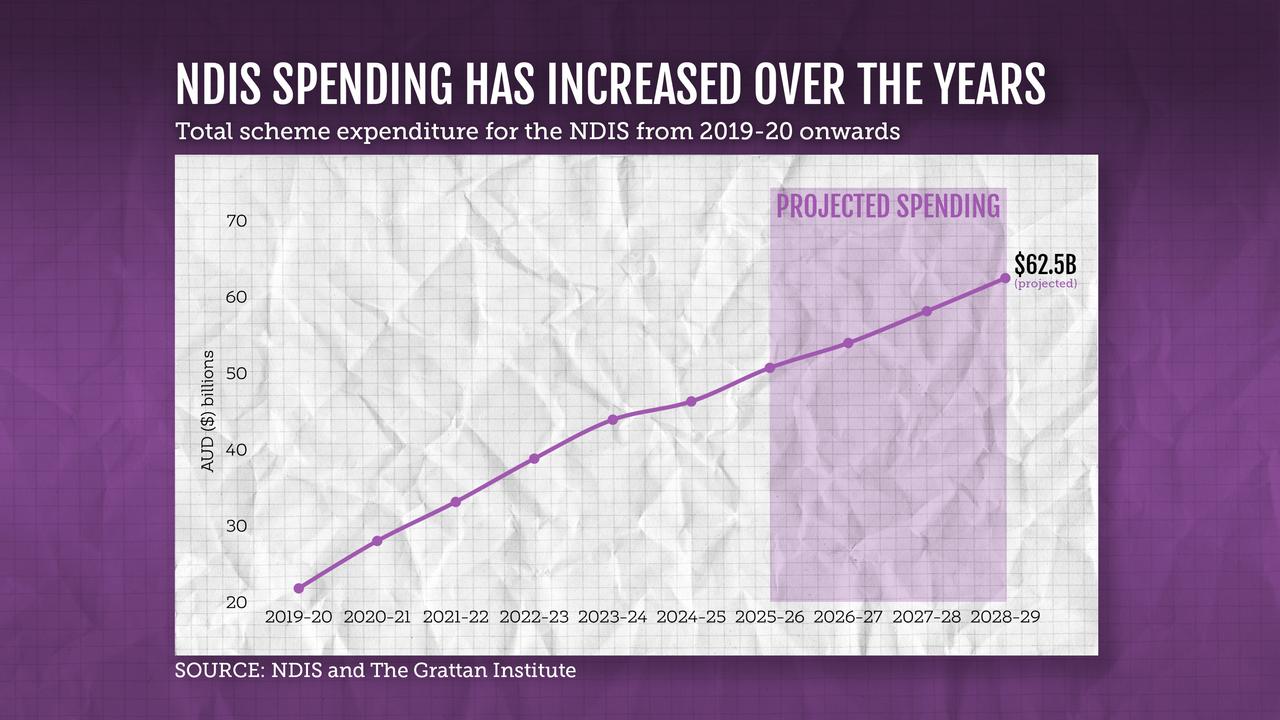
Structural spending pressures continued to strengthen in areas such as defence, health and interest costs, offsetting historically large savings on the NDIS.
But if NDIS spending growth remained above the two per cent forecast over the next four years, it would add yet more pressure onto the budget.
“The NDIS has consistently exceeded forecast growth and over the previous five years has grown at an average rate of 18.7 per cent each year, highlighting the challenges in achieving this,” the report said.
Cuts to immigration would also threaten the budget bottom line, the office said in its report.
AAP