Prominent Jewish family hit by 1500 threats a month
Lucinda Garbutt-Young and Ben McKay |
Thousands of attacks and death threats are levelled at one of Australia’s most prominent Jewish families each year, a royal commission has heard.
Steven Lowy, the former Westpac co-chief executive and son of billionaire Frank Lowy, retains a personal security team who monitor online threats to his family.
He said about 40 people had been referred to police and 1500 posts were flagged in a four-week period.
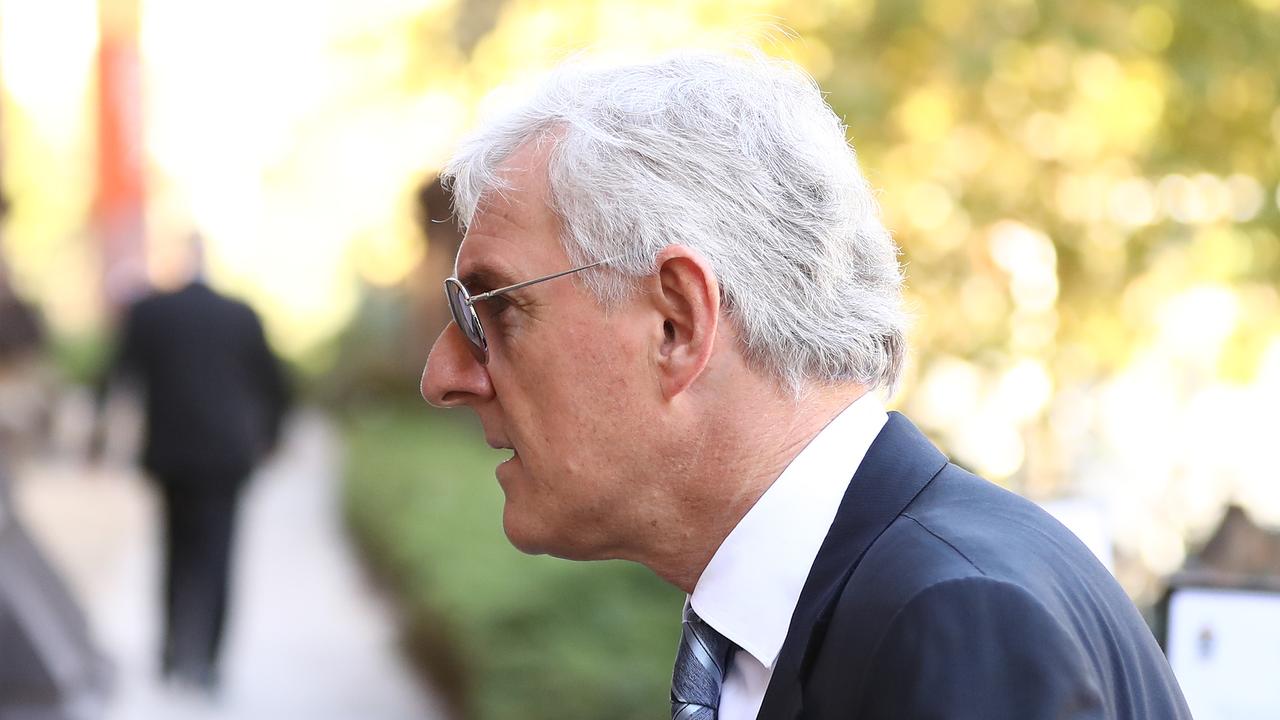
“It disturbs me, the volume and prevalence of it, and the serious nature of it,” he told the inquiry into anti-Semitism on Monday.
“You would be subject to conviction in other areas where this was communicated.”
Mr Lowy, whose father is reportedly worth more than $10 billion after building the Westfield shopping malls empire, has called for a Singapore-style national service to be set up, which he said would help repair Australia’s social fabric.
He used an 18-page submission to the commission to call for increased police powers in every state “for the protection of Jewish Australians and Jewish communal life”.
Among the Lowy family victims were his wife, Judy, who was branded “#genocidejudy” online after she launched a campaign to raise money for a prestigious Sydney Jewish school foundation where she is a board member.
“It was published by somebody with over 230,000 followers. It’s had enormous airplay,” Mr Lowy said about the now-removed hashtag.
The anti-Semitism royal commission resumed in public view on Monday after a behind-closed-doors stretch focused on security issues.
For the next fortnight, commissioners will be trained on the role of media – particularly the ABC and SBS – and the nature, prevalence and drivers of anti-Semitism and other hate speech on social media.
Among the witnesses was an anonymous Sydney woman who detailed threats her young daughter had received online from fellow school students, which had been reported to police.
For others, such as Arsen Ostrovsky, their experiences following the Bondi terror attack had made their children scared to be in public.
Separated from his family who had fled to the beach, Mr Ostrovsky was shot in the head during the December 14 attack.
Fearing for his life, he lay bleeding on the grass at the targeted Hanukkah celebration.
A photo of his bleeding scalp, and another receiving medical treatment, became parts of a conspiratorial campaign to deny the attacks took place.
His nine-year-old daughter, who grew up mainly in Israel, found it safer to be there even during war than in Australia, Mr Ostrovsky told the commission on Monday.
“This is the same daughter who, when we go to school, has to go through not one or two, but at least three layers of security,” he said.
Online hate speech against Jews now used updated language but had the same meaning, he told the commission.
“What I’ve seen is a lot of code words, for example, instead of Jew, it’s ‘Zion’ or ‘Zionist’. (People) are claiming that somehow, because I am a Zionist, I am less deserving of the same rights and the same protections as everyone else,” he said.
Social media giant Meta – which owns and operates Facebook, Instagram, WhatsApp, Messenger and Threads – has confirmed it will appear before commissioners in coming days.
A 2024 study by the Melbourne-based Online Hate Prevention Institute, which studies anti-Semitism and other hate speech, found a five-fold spike in anti-Jewish content on social media in the months after the October 7, 2023 attack by Hamas on Israel.
The degree of vitriol varied across platforms, with three singled out for “particularly concerning” levels of incitement to violence: Facebook, X and little-known far-right platform Gab.
The royal commission held its its first three weeks of hearings in May, taking evidence from witnesses including school students who said they experienced anti-Semitism from friends.
AAP