Up sticks: great escape to the country at record high
Stephanie Gardiner |

It’s not too big, it’s not too small, it’s just right.
That’s how Toowoomba businessman Isaac Moody describes the regional city west of Brisbane.
“It’s in the Goldilocks zone,” Mr Moody told AAP.
“It feels like a big country town, but you’re only one-and-a-half hours out of Brisbane so you get the best of both worlds.”
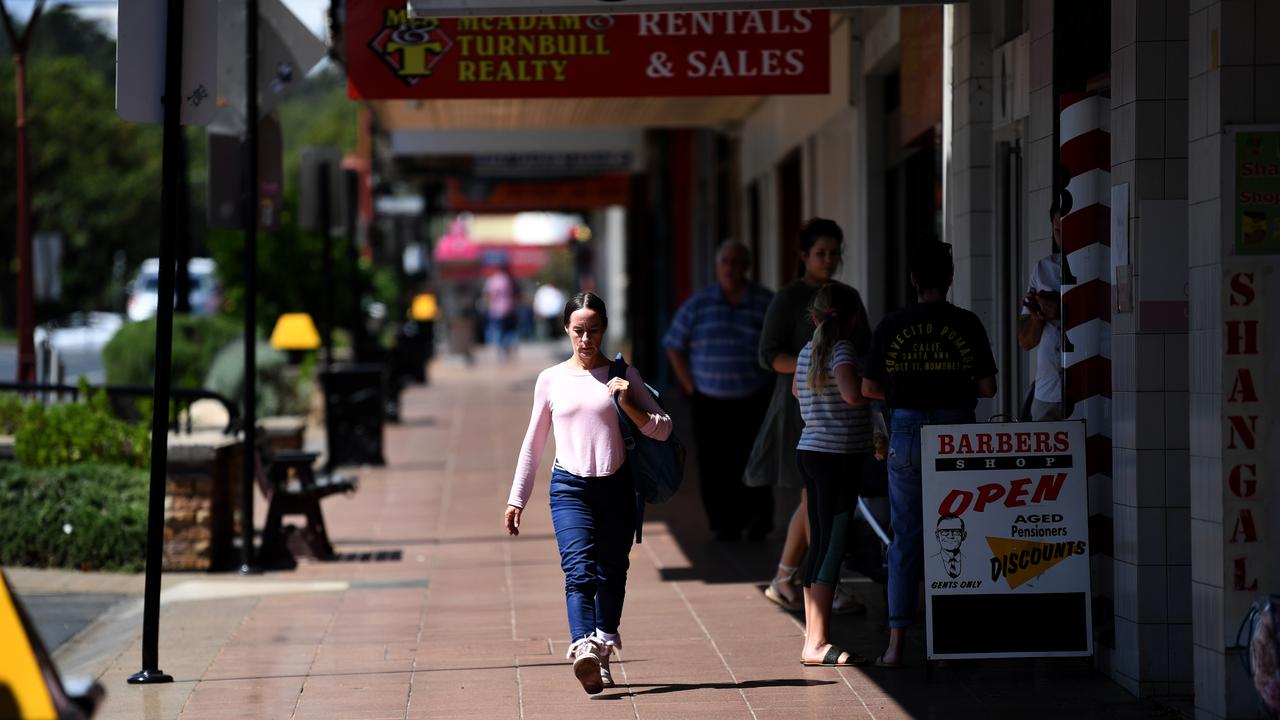
Home to 173,000 people, Toowoomba is leading the population shift as Australians leave the cities in favour of the regions at record levels.
The Regional Movers Index, which tracks population movement from the cities, has hit an all-time high, rising 20.1 per cent in the first three months of 2026.
City residents moving to the regions outnumbered migration in the opposite direction by almost 30 per cent in the March quarter, according to index data released on Tuesday.
That represented nearly four city-to-region movers for every three going the other way.
The index, compiled by the Regional Australia Institute using Commonwealth Bank customer data, showed Sydney and Melbourne were losing the most residents to the regions.
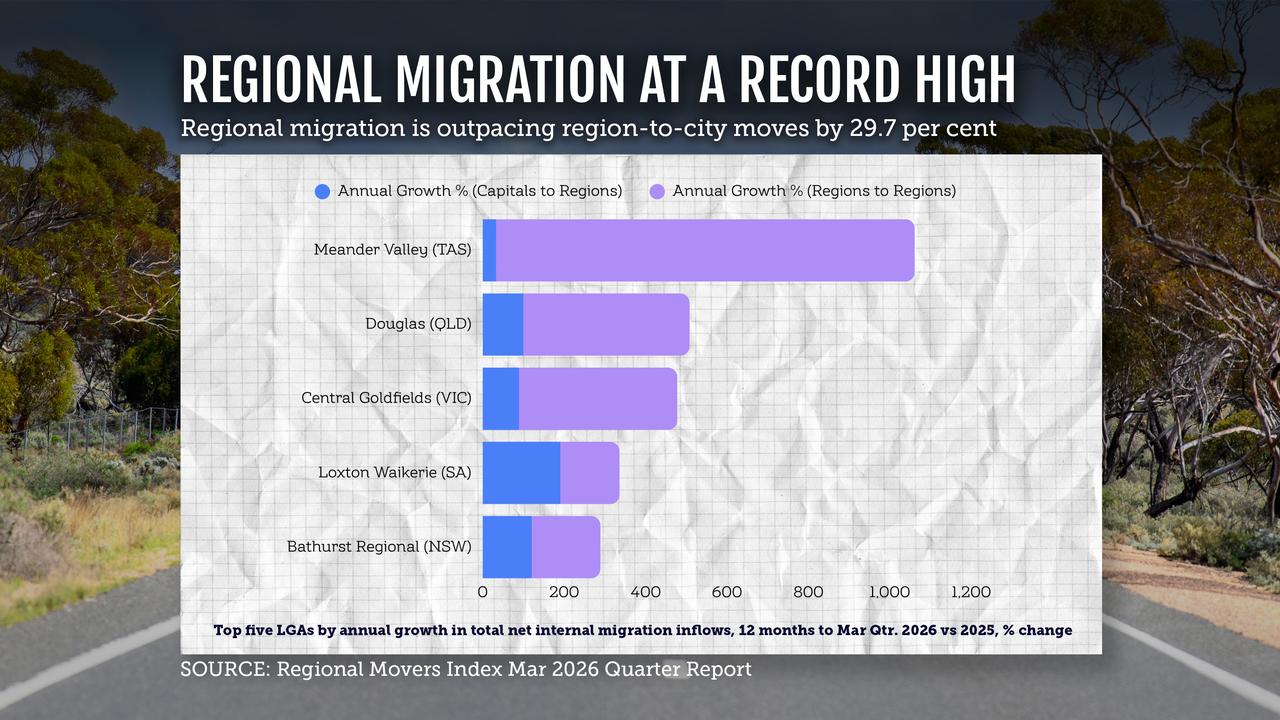
Sydneysiders accounted for 55 per cent of all capital-city movers, while Melburnians represented 36 per cent.
“This isn’t a one-off spike, it’s a continued, sustained long-term trend,” Commonwealth Bank’s executive general manager of regional and agribusiness Kylie Allen said.
“Australians are continuing to make considered, long-term decisions to build their lives in regional communities, with that strong demand around lifestyle appeal (and) employment opportunities.”
The top five destinations were Queensland’s Sunshine and Fraser coasts, greater Geelong and Moorabool in Victoria, and Lake Macquarie in NSW.
Emerging hot spots were Toowoomba and Townsville in Queensland, Broome in WA, Clarence Valley in northern NSW and Indigo in Victoria.
The index, which initially began tracking regional migration during the COVID-19 pandemic, noted the population shift has endured inflation pressures, the cost-of-living squeeze and housing volatility.
But quick regional growth has put pressure on housing markets and infrastructure.
Dwelling values rose 0.6 per cent in May, while city values were flat or slightly down, according to a recent report by property analytics firm Cotality.
The regional think tank’s chief executive Liz Ritchie said the index could be used to identify regions in need of planning and investment.
“We’re not just tracking movement, but providing early indications of where regional growth is emerging, so government, investors, industry and communities can respond before pressure builds,” she said.
Mr Moody’s family was ahead of the curve, moving from the Sunshine Coast to Toowoomba when he was still at school.
The regional centre continued to attract families decades on because of its diverse economy, job opportunities, good schools and culture, he said.
“Our family, when we first moved all those decades ago, we were immersed in that,” Mr Moody said.
“And now my kids continue to be.”
AAP