Relief likely as Reserve Bank tipped to hold cash rate
Andrew Brown |
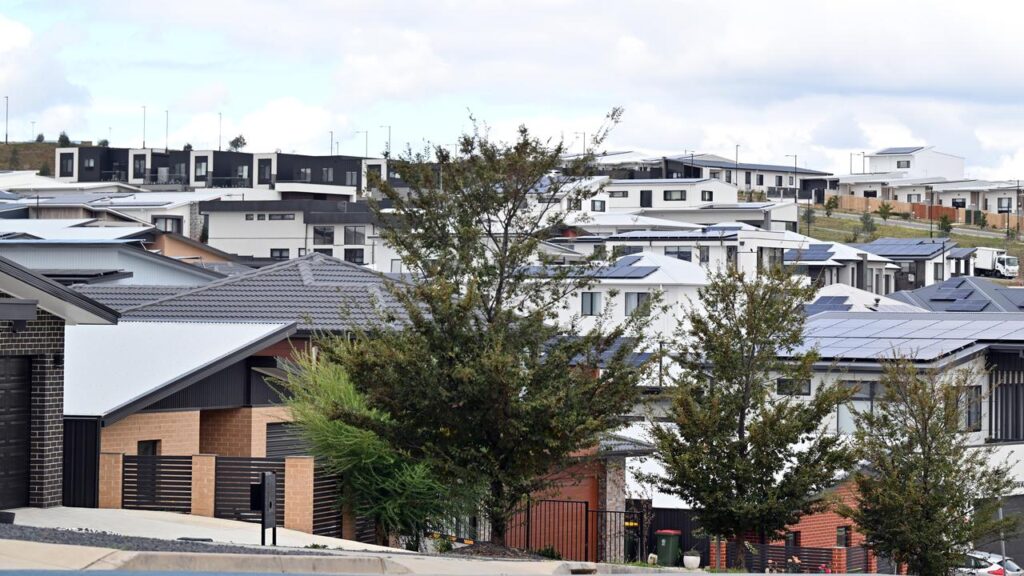
Mortgage holders could get a brief reprieve from further interest rate hikes, but economic uncertainty in the Middle East will still loom for the Reserve Bank.
Economists are tipping the central bank to keep the official cash rate on hold at 4.35 per cent when it meets on Tuesday.
Should the predictions hold, it would be the first time the Reserve Bank has kept rates steady since the start of 2026.
Despite inflation levels remaining above the Reserve Bank’s target band of two to three per cent, economists expect it will consider the impact of consecutive hikes.

Westpac economists Luci Ellis and Neha Sharma said the mixed data on inflation and the labour market supported the case for a pause.
“We continue to expect that the RBA will pause at its June meeting as it assesses the data flow,” they said in a research note.
“However, we believe it will remain focused on getting inflation back down to target and will be less swayed by some of this softer data than some observers might assume.”
Westpac said it still expected mortgage holders to be hit with subsequent increases to their interest rates in August and September.
“This is consistent with the RBA’s priority to get inflation down,” the note said.
“The monetary policy board will regard soft outcomes for the consumer and housing sectors as being a necessary part of the transmission of monetary policy.”

Head of Australian economics at Commonwealth Bank Belinda Allen said the Reserve Bank would be watching the Middle East to see how outcomes affect Australian markets.
“We expect a focus on inflation to remain in place given inflation is too high and there remains some uncertainty over the pace and extent of pass-through of higher prices from the conflict in the Middle East,” she said.
“We expect there will still be a discussion between a hike and a hold in June. But with little impetus to actually hike rates at this meeting, we expect the discussion will turn quickly to an on-hold decision.”
The rates decision is the first since the May federal budget, which introduced measures limiting negative gearing for new homes only and replacing a 50 per cent discount on the capital gains tax with a rate based on inflation.
The Reserve Bank will likely have a further chance to outline its reasoning for the rates decision when assistant governor Brad Jones addresses the Australian Banking Association’s conference in Melbourne on Wednesday.
Wall Street investors continue to hold out hope of a peace deal with Iran.

US stocks ended higher on Friday with SpaceX shares surging in their debut, the biggest public listing in history.
The Dow Jones rose 0.70 per cent, to 51,202.26, the S&P 500 gained 0.50 per cent, to 7,431.46 and the Nasdaq gained 0.31 per cent, to 25,888.84.
Australian share futures surged 39 points, or 0.44 per cent, to 21,317.
The S&P/ASX200 gained 170.8 points on Friday, up 1.98 per cent, to 8,804, as the broader All Ordinaries advanced 169.4 points, or 1.92 per cent, to 9,006.1.
AAP