Hi-tech Olympics planning ‘can create lasting legacy’
Abe Maddison |
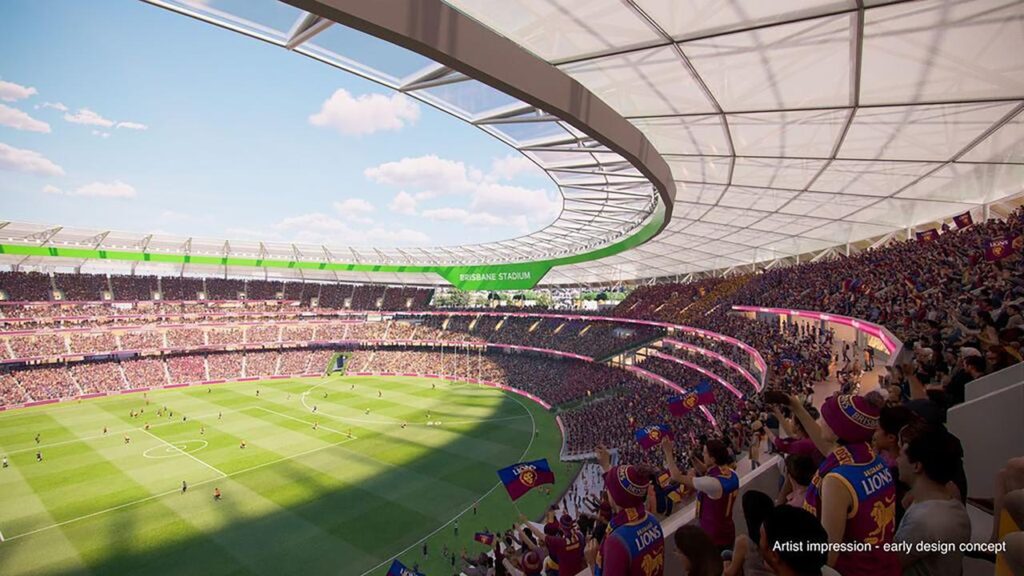
Infrastructure planning for the Brisbane Games needs a mindset shift to avoid past Olympic failures and create a legacy that lasts for generations, a sustainability expert says.
Joe Speicher is chief sustainability officer at US software company Autodesk, which is helping the 2028 Los Angeles Olympics achieve its ambitious sustainability goals through a “no-new-permanent-build” plan.
“We are the toolmaker for the folks that are building these Games,” he said.
Done well, the 2032 Games could leave Brisbane better equipped for the future, but done poorly the event risks repeating the mistakes of the past, such as Sydney’s troubled Homebush site, Mr Speicher said.

“What it requires is something of a mindset shift … how do we ensure that this is not a one-and-done but exists over many generations?” he said.
Unlike LA, Brisbane does not have the required infrastructure to host an Olympic Games, and with $7.1 billion slated for development, building is inevitable.
Mr Speicher believes Brisbane needs a hybrid approach, with some new permanent infrastructure where legacy use is genuinely viable, complemented by temporary builds modelled on the LA28 blueprint.
Tying infrastructure investment to existing plans for the city was crucial to a successful legacy, he said.
“They’ve already done a smart thing, they’ve got an anchor tenant (AFL and cricket) after the (Victoria Park) stadium is built, such that it will be reused,” he said.
The LA Games are committed to 90 per cent reuse of materials from temporary overlays, “which is a really interesting design challenge, because it means design for disassembly and reuse”.
Mr Speicher cited the example of beach volleyball venues in Santa Monica, where the aluminium used in stadium seating would need to be reused after the games.

As the tech landscape changes quickly through the use of data and AI, “it presents new options that we want to take from proof of concepts with LA and embed it into kind of standard workflows for Brisbane,” he said.
“If (the Games infrastructure authority) or the Queensland government says ‘we want the athletes village converted into housing that will alleviate housing challenges’, our tools can absolutely help with that.
“If the authorities say ‘we need to alleviate some of the transport infrastructure crunches that we’ve got today’, our tools can absolutely help with that.”
The software company’s tools could also help measure, manage and reduce carbon emissions.
Reality capture technology, which uses photogrammetry and point clouds to digitally recreate physical environments, could make investments more efficient and assets more resilient.
“So you take the Rose Bowl or LA Convention Centre, and turn that into a digital file that can then be manipulated to look at what overlays and renovations need to be made to meet the needs of the Games,” Mr Speicher said.
“It’s a relatively new technology and I think it will be much more mainstream in the lead-up to the Brisbane Games, and will allow a focus on outcomes as opposed to just project delivery overall.”
AAP