Manufacturer gears up for $2b ‘forever chemicals’ fight
Callum Godde |
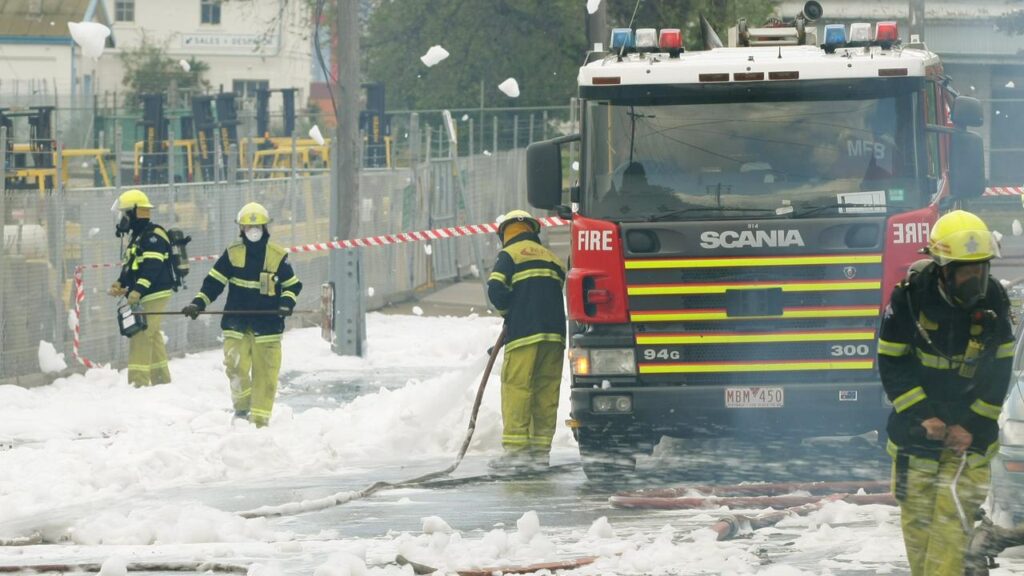
A multinational manufacturing heavyweight is vowing to fight a multibillion-dollar lawsuit over widespread contamination of Australian defence sites with “forever chemicals”.
The federal government is suing 3M for more than $2 billion to recover costs from per and poly-fluoroaklyl substances (PFAS) in firefighting foam that contaminated 28 defence bases across the country.
The claim, lodged in the Federal Court, alleges 3M withheld a range of information and misrepresented the effects of its aqueous film-forming foam, including environmental risks.
It was the largest legal claim ever brought by the Commonwealth, Attorney-General Michelle Rowland told reporters on Thursday.
“Australians rightly expect their government to stand up for them and to hold companies accountable when communities and the environment are impacted,” she said.
PFAS are a group of about 15,000 toxic, synthetic chemicals used for their resistance to heat, stains and grease.
They have been widely used in products including cookware and firefighting foams, and often called “forever chemicals” because they don’t break down naturally in the environment.
Any recouped money would be used to cover past and future expenses incurred in investigating, managing and remediating contamination resulting from the historical storage and use of the foam.

It has already cost Australian taxpayers $1.3 billion to respond to PFAS contamination on defence estates and nearby communities, including about $408 million in legal settlements.
More than 200,000 tonnes of contaminated soil had been treated or removed across defence sites to mitigate the spread, Assistant Defence Minister Peter Khalil said.
Another 13 billion litres of water has also been treated since PFAS contamination was identified in certain communities.
“This is not a case about personal injury or health claims,” Mr Khalil said.
“It is solely focused on the environmental, economic and cultural impacts and the costs that we’ve incurred with dealing with those impacts.
“The current advice is that there is limited evidence of the health impacts of PFAS exposure or contamination.”

3M stressed it never manufactured PFAS in Australia and ceased local sales of the problematic products about two decades ago.
“Despite this, the Department of Defence continued to use PFAS-containing fire fighting foams for nearly two decades longer, as noted in a recent legislative committee report,” the company said in a statement.
“We will defend ourselves against these claims through the legal process.”
A Senate inquiry in November recommended legal action against 3M and said any settlement should be used to fund remediation of contaminated sites.
Independent Senator Lidia Thorpe, who chaired the inquiry, said the lawsuit must not be treated as a budget cost-recovery exercise and criticised the government for downplaying PFAS’s health impacts.
“The government must finally come clean about the health risks posed by these toxic chemicals, update its public health advice, and provide proper health supports for affected communities,” she said.
“Today’s announcement is a significant step, but we cannot stop here.”

While the science around PFAS is evolving, the federal health department says the chemicals are associated with low birth weight in babies and altered levels of hormones.
Specific chemicals such as PFOA and PFOS are linked with an increased risk of testicular and kidney cancer.
In 2018, the Department of Defence warned locals near the Richmond Air Base to reduce their intake of local fish and eggs after PFAS was found in the groundwater nearby.
Australia banned the import, use and manufacture of PFOA, PFOS and PFHxS – another PFAS chemical – in 2025.
A European Union-commissioned study estimated the economic cost of PFAS pollution in the region would reach €440 billion ($A716 billion) if current levels continued until 2050.
A draft universal PFAS restriction proposal has been submitted by the European Chemicals Agency for consultation.
AAP