Bowen to back electrification at UN climate summit
Lisa Martin |
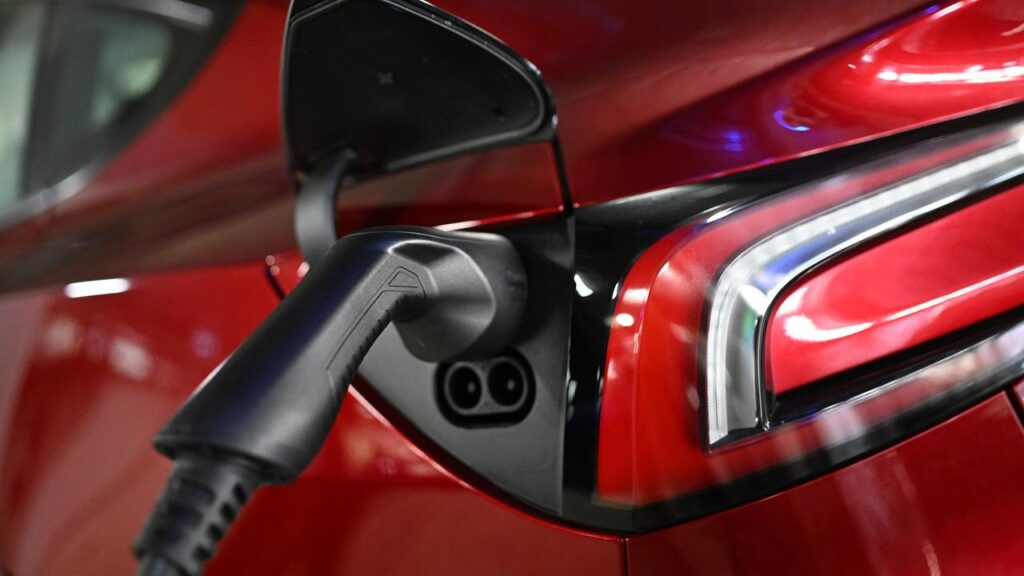
Australia and Turkey have flagged they will put vehicle electrification in the fast lane at this year’s United Nations climate summit, as the world grapples with the fallout from fuel shortages stemming from conflict in the Middle East.
Climate Change Minister Chris Bowen and his Turkish counterpart, Murat Kurum, co-hosted a ministerial meeting of 40 countries in Copenhagen on Wednesday and Thursday that will help shape the agenda of the COP31 conference in Antalya.
The annual Copenhagen talks are a pit stop on the way to the main summit and a chance to road test fresh ideas in an informal setting.

Mr Bowen and Mr Kurum nominated electrification as their big-ticket priority.
The transport sector accounts for 15 per cent of total greenhouse gas emissions, the UN says.
“Higher oil prices are putting pressure on all our citizens from Suva to Sydney to Stockholm,” Mr Bowen said.
The talks emphasised that the renewables rollout also helps shore up energy independence, as countries deal with the biggest oil shock in world history.
“No one can sanction the sun, no one can blockade the wind,” Mr Bowen said.
“Solar energy has to travel 150 million kilometres to earth, but it does not have to travel the 150 kilometres of the Strait of Hormuz.”
The ministers touched on the need for more rare earth minerals for car batteries. China has a monopoly on critical minerals processing.
“Of course, we will work with all countries that currently supply, but we also welcome other countries who are adding value for the first time,” Mr Bowen said.
The growing popularity of electric vehicles – one in four cars sold globally runs on a battery – is a sign of optimism, Mr Bowen said.
Australians went from buying an electric vehicle once every 50 minutes four years ago to once every three minutes in April, Mr Bowen said.
Prime Minister Anthony Albanese’s government introduced an electric car tax discount in 2022 that will be wound back over the next three years, according to the May budget.
The full tax discount will apply only to electric cars worth $75,000 and less from April 2027, purchased under novated leases, and will become a 25 per cent fringe benefits tax cut for all electric vehicles under the luxury car tax threshold from April 2029.
But Mr Bowen dismissed accusations of mixed messages and played down the Climate Council’s concerns that the move will put the handbrake on sales.
“We’ve saved the EV discount; it is still in place, we have just calibrated it to reflect the fact that there are many more affordable models in Australia,” he told AAP in Copenhagen.
“When we brought in the EV tax cut, there was no EV available for under $40,000, and now there are 10.”
Cars are not the only focus for electrification. Mr Kurum heaped praise on Denmark’s network of 12,000km of bike paths, as acting Danish climate minister Lars Aagaard highlighted the thousands of Danish families doing the daily school and kindergarten drop off with electric cargo bikes.
“You can commute longer … you get a more quiet city and you get clean air,” Mr Aagaard said.
Pacific island nations Palau, Tuvalu, the Marshall Islands and Fiji were represented at the Copenhagen talks.
“The Pacific often gets sidelined at COPs… I want to change that,” Mr Bowen said.
“I’ll be meeting with (Pacific island ministers) almost every day during Antalya … making sure they are fully in the loop and giving feedback to me.”
While in Copenhagen, Mr Bowen and other ministers dropped by Amalienborg Palace to meet with Danish King Frederik, who has a special interest in climate change.
He and his Australian-born wife Queen Mary, in March, undertook a state visit to Australia with a large Danish green energy business delegation in tow.
Denmark is a world leader in offshore wind energy and wants to help Australia with its green energy transition.
AAP