Iran threatens painful response if US resumes attacks
Timothy Gardner |
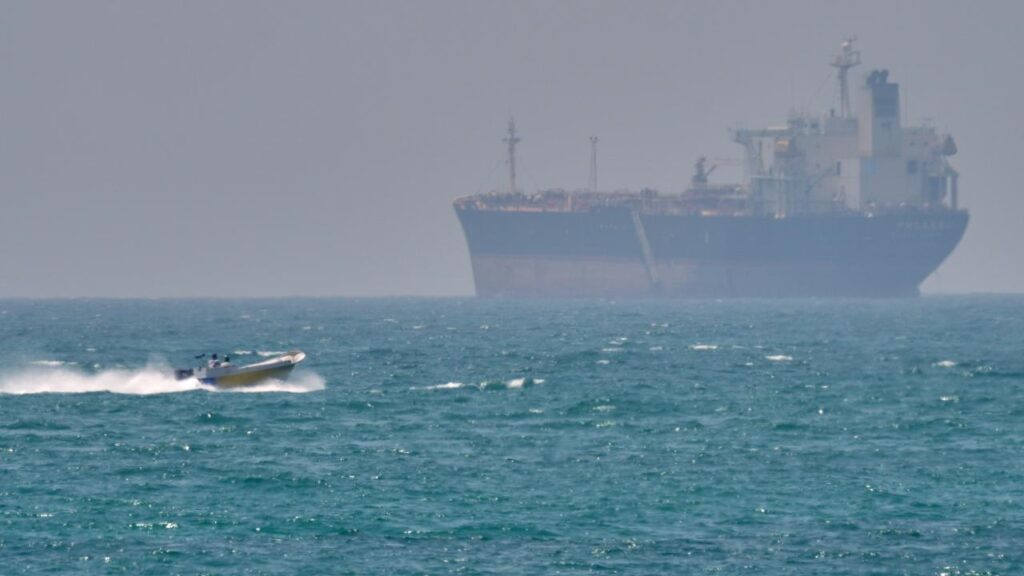
Iran warns that if Washington renews attacks it will respond with “long and painful strikes” on US positions, complicating US plans for an international coalition to open the Strait of Hormuz.
Two months into the war that started with US-Israeli strikes on Iran, the vital sea channel remains closed, choking off 20 per cent of the world’s supplies of oil and gas.
That has sent global energy prices surging and heightened concerns about the risks of an economic downturn.

Efforts to resolve the conflict have hit an impasse, with a ceasefire in place since April 8 but Iran still blocking the strait in response to a US naval blockade of Iran’s oil exports, the country’s economic lifeline.
US President Donald Trump is slated to receive a briefing on Thursday on plans for a series of fresh military strikes on Iran in hopes of making Iran more flexible on nuclear issues in negotiations, Axios news site reported.
That spurred big gains in oil prices, with the benchmark Brent crude contract hitting more than $US126 a barrel at one point, its highest level since March 2022 after Russia’s invasion of Ukraine. It later slipped back to $US113 a barrel.
Any US attack on Iran, even if limited, would usher in “long and painful strikes” on US regional positions, a senior Revolutionary Guards official said.
“We’ve seen what happened to your regional bases, we will see the same thing happen to your warships,” Aerospace Force Commander Majid Mousavi was quoted by Iranian media as saying.
Brent prices have doubled since the US-Israeli attack on Iran began on February 28, fuelling inflation and sending pump prices to politically painful levels worldwide.

As well as blocking almost all but its own shipping through the strait, Iran launched drones and missiles at Israel and US bases, infrastructure and US-linked companies in Gulf states.
Tehran warned on Wednesday of “unprecedented military action” against continued US blockading of Iran-linked vessels.
The warning, together with the possibility of further US military strikes, signalled more Middle East oil supply disruptions from a conflict that has killed thousands.
Another plan to be shared with Trump involves taking over part of the Strait of Hormuz to reopen it to commercial shipping, the Axios report said, saying such an operation might involve ground forces.
In a sign the US was also envisaging a scenario where hostilities cease, the State Department cable invited partner countries to join a new coalition called Maritime Freedom Construct to enable ships to navigate the strait.
“The MFC constitutes a critical first step in the establishment of a post-conflict maritime security architecture for the Middle East,” said the cable, which was due to be delivered orally to partner nations by May 1.
France, Britain and other countries have held talks on contributing to such a coalition but said they were only willing to help open the strait when the conflict ends.
Supreme Leader Mojtaba Khamenei said in a written message to Iranians that Tehran would eliminate “the enemies’ abuses of the waterway” under new management of the strait, indicating that the country intended to maintain its hold over it.
Mediator Pakistan was trying to avoid escalation while the two sides exchange messages on a potential deal, a Pakistani source said on Wednesday.
Trump has said Iran cannot have a nuclear weapon, while Tehran says its nuclear ambitions are peaceful.
Iran’s latest offer for resolving the war, suspended since April 8 under a ceasefire deal, would set aside discussion of its nuclear program until the conflict is formally ended and shipping issues resolved.
That did not meet Trump’s demand to tackle the nuclear issue at the outset.
Reuters