Protest restrictions struck down in ‘win for democracy’
Kat Wong |
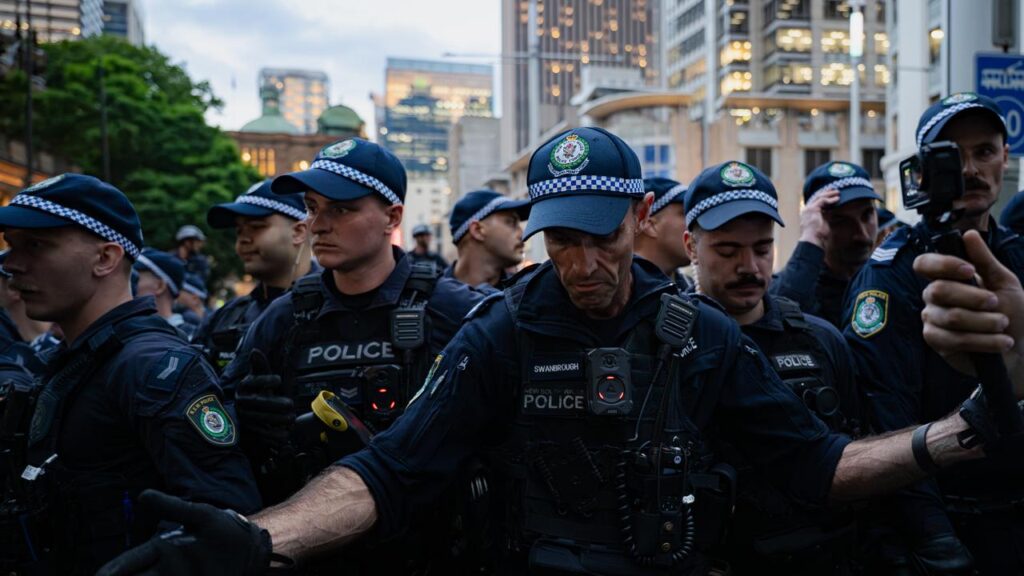
Powers used to curb protest in the aftermath of the Bondi massacre have been struck down in what has been called a major win for Australians’ civil liberties.
The controversial measures, which were rushed through NSW parliament in December, allowed the police commissioner to make a declaration preventing residents from seeking authorisation for rallies in key parts of Sydney for up to three months after a terror attack.
This left protesters vulnerable to arrest for obstructing traffic or pedestrian movements if they marched through the streets.
While NSW Premier Chris Minns said the laws were necessary to maintain order and peace, activist organisations Palestine Action Group and Blak Caucus disagreed and took the state government to court.
Chief Justice Andrew Bell on Thursday found the laws were an “impermissible burden” on the implied constitutional freedom of communication on government and political matters.
“The (declaration) scheme is a blunt tool,” he wrote in his NSW Court of Appeal decision.
“It is not enough that the legislature perceived the need for strong action to preserve the cohesion and safety of the community…
“The system of government established by the Commonwealth constitution does not permit the state to pursue such an objective by authorising the executive to impose such a sweeping and indiscriminate restriction on all public assemblies.”
The NSW government will be forced to pay costs to Palestine Action Group and Blak Caucus, which could be in the hundreds of thousands of dollars.

As the judgment was handed down, supporters donning traditional Palestinian keffiyehs let out whoops and cheers, patting the lawyers on the back and thanking them for their work.
“This is a big win for everyone who cares about the right to protest, who cares about democracy in New South Wales, and, of course, who cares about a free Palestine,” Palestine Action Group spokesman Josh Lees told reporters outside court.
Though the restrictions are no longer in place, they were not eased until February, about a week after police violently broke up a Town Hall protest opposing Israeli President Isaac Herzog’s trip to Australia.
During the crackdown, dozens of attendees were pepper sprayed while others were brutally beaten and arrested by police.
The event was also policed under a major events declaration that gave authorities powers to clear the area at their determination, Thursday’s decision could pave the way for impacted protesters to seek compensation through the courts.
“These laws were never really about community safety, social cohesion, or any of this stuff that Chris Minns has talked about, this was merely his latest attempt to ban protests against war and genocide,” Mr Lees said.

The NSW government’s attempts to block a pro-Palestine rally at the Sydney Harbour Bridge and allow police to move on protesters who affect a person’s ability to enter or leave a place of worship were previously struck down by the courts.
Nick Hanna, a solicitor working for Palestine Action Group, said this pattern was likely to continue.
“If they keep passing anti-democratic laws, the people of the state will keep challenging them,” he said,
The protest restriction was imposed and extended multiple times after two gunmen opened fire on a Hanukkah celebration at Bondi Beach in mid-December, killing 15 people.

Mr Minns said his government was “obviously disappointed” by the court’s decision and continued to stand by the laws.
“This was in the aftermath of the worst terrorist attack our country has seen,” he said.
“We believe it was necessary and important for Sydney at the time.”
Greens MP Sue Higginson said the court’s decision was an indictment on Mr Minns’ performance, noting he bore the responsibility for police brutality at the February protest.
“This is a real reminder of how our state premier Chris Minns has failed the people, has failed to understand his job and has failed our democracy,” she told reporters.
AAP