Good news is bad news: GDP growth fuels inflation fears
Jacob Shteyman |
Higher spending on defence, data centres and Black Friday sales has helped the economy grow at its fastest pace in almost three years, boosting living standards but raising fears of more interest rate hikes.
Gross domestic product expanded 0.8 per cent in the December quarter, above Reserve Bank forecasts.
The central bank had expected the nation’s gross domestic product to expand 2.3 per cent over 2025.
But figures released by the Australian Bureau of Statistics on Wednesday showed the economy grew by 2.6 per cent, the fastest annual growth rate since March 2023.
Annual growth was up from 2.1 per cent in September.
The result will do little to dampen RBA concerns about inflation, given it estimates the economy cannot grow faster than about two per cent annually without adding to price pressures, thanks in part to Australia’s weak productivity growth.
Productivity as measured by GDP per hour worked grew one per cent over the year.
Deloitte Access Economics partner Stephen Smith said the national accounts data was a case of “when good news is actually bad news”.
Unless Australia could fix its poor productivity performance, low growth and high inflation might become entrenched as long-term features of the economy, he said.

“The RBA is already of the view that the economy is operating above its potential,” Mr Smith said.
“Combined with elevated inflation, today’s data will keep the RBA on high alert and increase the likelihood of a rate hike in May.”
But IG market analyst Tony Sycamore said the stronger-than-expected headline figure masked some softness in the underlying data.
Household consumption grew at a subdued rate of 0.3 per cent over the quarter, while the household saving ratio climbed to its highest level since September 2022.
“This is an indication that cost-of-living pressures are still biting – Aussies are channelling extra income into savings rather than spending it,” Mr Sycamore said.
“For the RBA’s upcoming March meeting, this print takes some pressure off the need for an immediate rate hike.”

Before the release, bond traders were pricing in the chance of a rate hike on March 17 at about a third after hawkish comments by RBA governor Michele Bullock that the meeting would be “live”.
Following the GDP data, markets actually wound back expectations for a March rate hike to less than 15 per cent.
But AMP economist My Bui said this was probably a bit of an overreaction, given discretionary spending figures were still robust amid strong Black Friday and concert ticket sales.
ABS head of national accounts Grace Kim said economic growth was broad-based over the quarter, with rises across a large majority of industries and public and private demand both contributing 0.3 percentage points to the GDP rise.
On a per-capita basis, the economy grew 0.4 per cent over the quarter.
Economists had revised up their GDP growth predictions on Tuesday after stronger-than-expected public demand figures, driven by a spike in defence spending and investment by federal public corporations.

Private investment grew by 0.7 per cent as data centre and aircraft investment continued to soar.
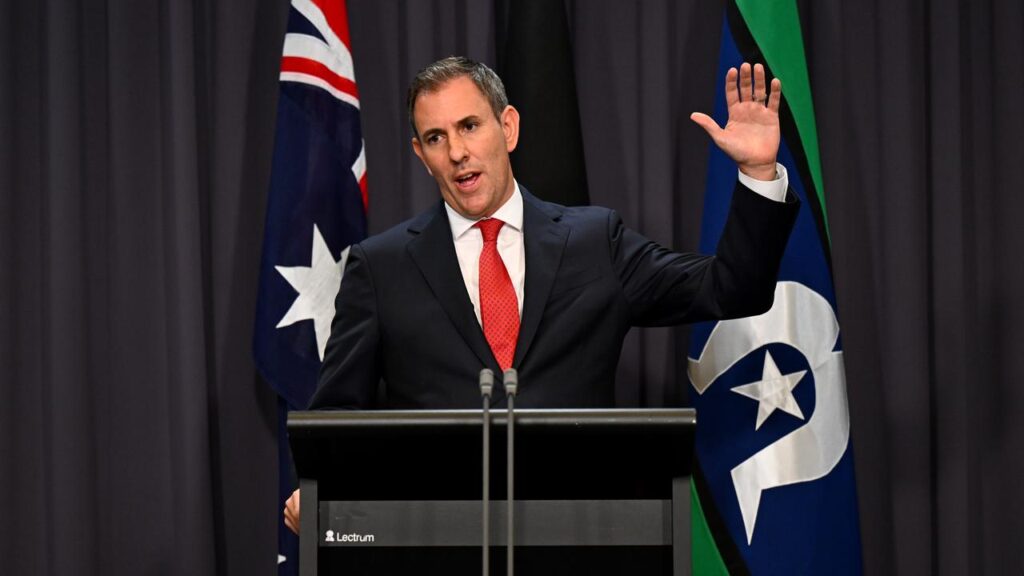
Treasurer Jim Chalmers said it was a “really encouraging set of numbers” that would provide the best foundation to deal with global uncertainty amid conflict in the Middle East and surging oil prices.
The big story of 2025 was the pick-up in private demand as the key driver of the economy, he said.
Real disposable incomes per capita – a crude measure of living standards – rose 0.1 per cent in the quarter.
But shadow treasurer Tim Wilson accused the government of driving inflation with high public spending.
“Pyro Jim keeps pouring debt petrol on the inflation fire and that is why Australian standards of living are declining,” he said.
AAP