Accused in failed Invasion Day bombing attempt unmasked
Aaron Bunch |
Details about the fragile mental state of a man accused of throwing a homemade bomb into an Invasion Day rally crowd have been revealed as a magistrate lifted a suppression order on his identity.
Liam Alexander Hall, 32, has been charged with engaging in a terrorist act over the incident in Perth on January 26.
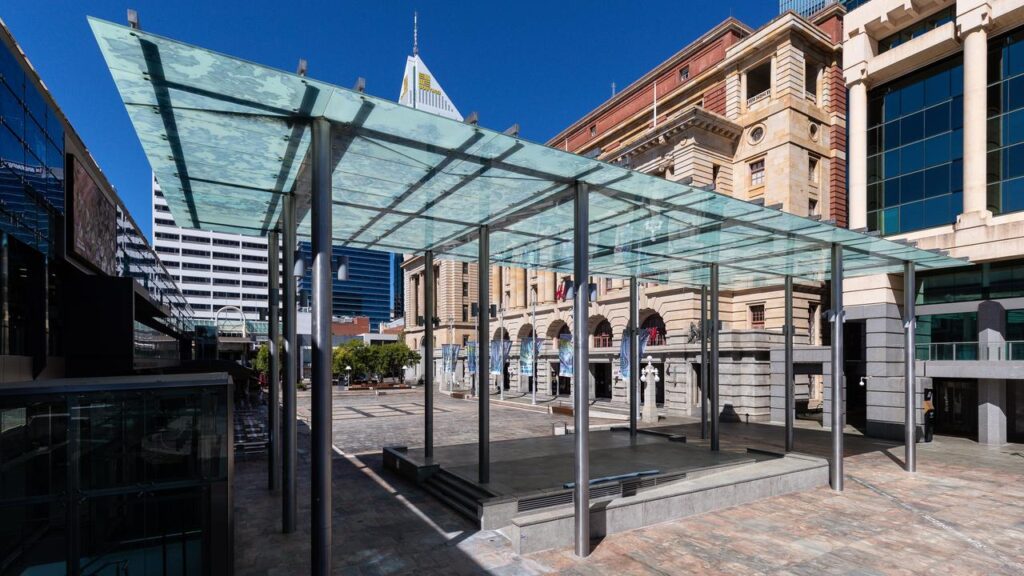
Thousands of people were evacuated from Forrest Place in Perth’s city centre after police found an object containing volatile chemicals, nails and metal ball bearings.
Police allege Hall threw the explosive device from a walkway above the crowd of Indigenous people, families and supporters.
The device did not detonate despite a fuse allegedly being lit.
The incident has been declared an act of terror – the first in Western Australia’s history – with the case returning to court on Tuesday.
Defence lawyer Simon Freitag said Hall was too unfit to appear in court due to health reasons.
“The accused is in a vulnerable mental health condition and he can’t even appear in court today,” he said.
Hall’s psychiatrist recommended a six-week adjournment for the case so he could be medically treated, he said.
A plea cannot be considered until this has occurred, Mr Freitag said.
A state forensic mental health service medical report with the doctor’s findings was submitted to the court.
Magistrate Lynette Dias adjourned the case to March 31 after a commonwealth charge of engaging in a terrorist act was added to two state charges.
She also lifted a suppression order on Hall’s identity after hearing submissions from a commonwealth prosecutor and lawyers for various media outlets.
“Given the serious nature of these charges and fundamental principles relating to open justice, I do not consider that issues relating to the accused’s interests and his personal circumstances justify displacing the usual practice of naming accused persons,” she said.
Opposing the suppression order being lifted, Mr Freitag acknowledged the massive public interest in the case.
But he said Hall was at risk of harm in custody, citing the doctor’s assessment.
Police allegations about his particular views could also bring him into conflict with the prison population if his identity was revealed, he said.
It may also harm his father and two brothers, both of whom also have mental health issues, he said.
Hall did not live with his family, who Mr Freitag said were innocent parties.
Police have spoken to Hall’s family about ensuring their safety, the court was told.
If Hall is found guilty of the terrorism offence, he faces life behind bars.
He is yet to enter pleas to any of the charges, which also include an unlawful act or omission with intent to harm and making or possessing explosives under suspicious circumstances.
Police will allege the incident was a nationalist and racially motivated attack targeting First Nations people at the protest.
The man was self-radicalised and acted alone, police previously said.

He had allegedly accessed bomb making instructions and “pro-white male” material online, and was accessing and participating in the ideology.
The incident has left First Nations Australians fearful and angry, as they come to terms with the allegedly targeted attack.
Indigenous groups have criticised authorities for not immediately declaring it a terrorist act amid cries of double standards and racism.
Police defended the nine-day delay, saying investigators needed to gather evidence on the alleged bomber’s motivation and ideology so it could be legally proved in court.
In late January, the court heard Hall had been diagnosed with autism and would face significant hardship in custody.
Hall was initially granted a suppression order over his identity, location and medical condition due to fears for his safety.
Commonwealth prosecutor Kirsten Nelson said Hall’s safety could be managed in custody, as she advocated for the suppression order to be lifted.
He was remanded in custody and the case will return to the Stirling Gardens Magistrates Court on March 31.
13YARN 13 92 76
Lifeline 13 11 14
AAP