US-Iran talks venue changed to Oman
|
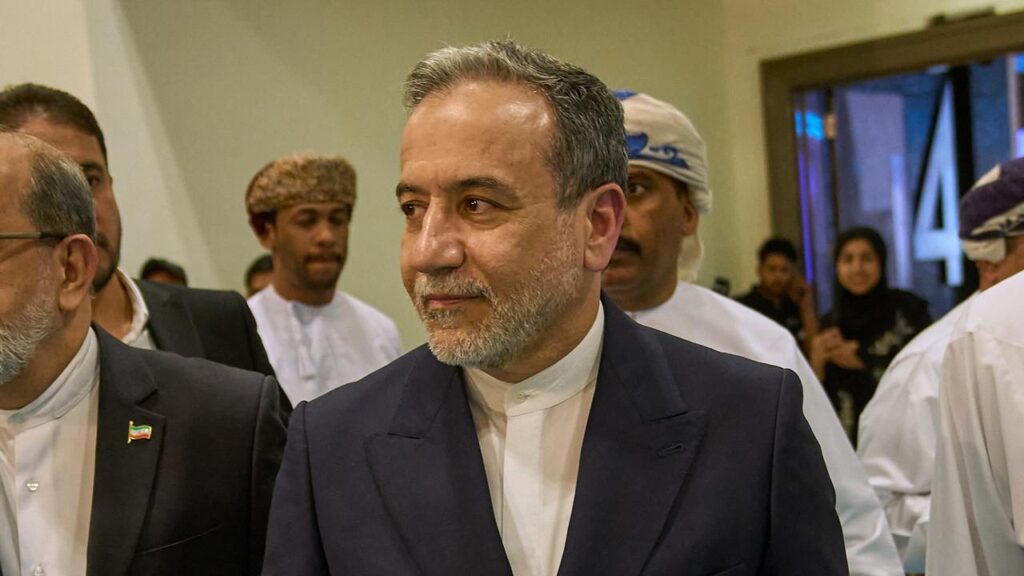
The US and Iran have agreed to hold talks in Oman even as they remain at odds over Washington’s insistence that negotiations include Tehran’s missile arsenal and Iran’s vow to discuss only its nuclear program.
Differences in recent days over the scope and venue for the talks have raised doubts whether the meeting would take place, leaving open the possibility US President Donald Trump could carry out his threat to strike Iran.
Asked whether Iran’s Supreme Leader Ayatollah Ali Khamenei should be worried, Trump told NBC News: “I would say he should be very worried. Yeah, he should be.” He added that “they’re negotiating with us” but did not elaborate.
After Trump spoke, US and Iranian officials said the two sides had agreed to shift the talks’ location to Muscat after initially accepting Istanbul.
But there was no indication they had found common ground on the agenda.
Iran has pushed to restrict the negotiations to discussing its long-running nuclear dispute with Western countries.
But US Secretary of State Marco Rubio presented a different view. “If the Iranians want to meet, we’re ready,” Rubio told reporters.
But he added that talks would have to include the range of Iran’s ballistic missiles, its support for armed proxy groups around the Middle East and its treatment of its own people, besides nuclear issues.
US Vice President JD Vance told The Megyn Kelly Show diplomatic talks with Iran are challenging because of Tehran’s political system, overseen by Khamenei.
“It’s a very weird country to conduct diplomacy with when you can’t even talk to the person who’s in charge of the country. That makes all of this much more complicated, and it makes the whole situation much more absurd,” Vance said, noting that Trump could speak directly by phone with the leaders of Russia, China or North Korea.

Vance said Trump’s bottom line is that Iran cannot be allowed to develop a nuclear weapon, asserting that other states in the region would quickly do the same.
Vance said he believed Trump would work to “accomplish what he can through non-military means”.
“And if he feels like the military is the only option, then he’s ultimately going to choose that option,” Vance said.
A senior Iranian official said Iran’s missile program was “off the table”.
A second senior Iranian official said Tehran would welcome negotiations over the nuclear dispute but that US insistence on dealing with non-nuclear issues could jeopardise the talks.
While the talks were originally slated for Turkey, Iran wanted the meeting to take place in Oman as a continuation of previous talks held in the Gulf Arab country that had focused strictly on Tehran’s nuclear program, a regional official said.
Iranian President Masoud Pezeshkian on Tuesday said he had instructed the country’s foreign minister to “pursue fair and equitable negotiations” with the US.
The announcement came after a US navy fighter jet shot down an Iranian drone that approached a US aircraft carrier early on Tuesday morning.
Iranian fast boats from its paramilitary Revolutionary Guard also tried to stop a US-flagged ship in the Strait of Hormuz, the narrow mouth of the Persian Gulf, the navy said.
The diplomatic efforts follow Trump’s threats of military action against Iran during its bloody crackdown on protesters in January and the deployment of more naval power to the Gulf.
with AP
Reuters