The smell of native grasses reviving women’s knowledge
Keira Jenkins |
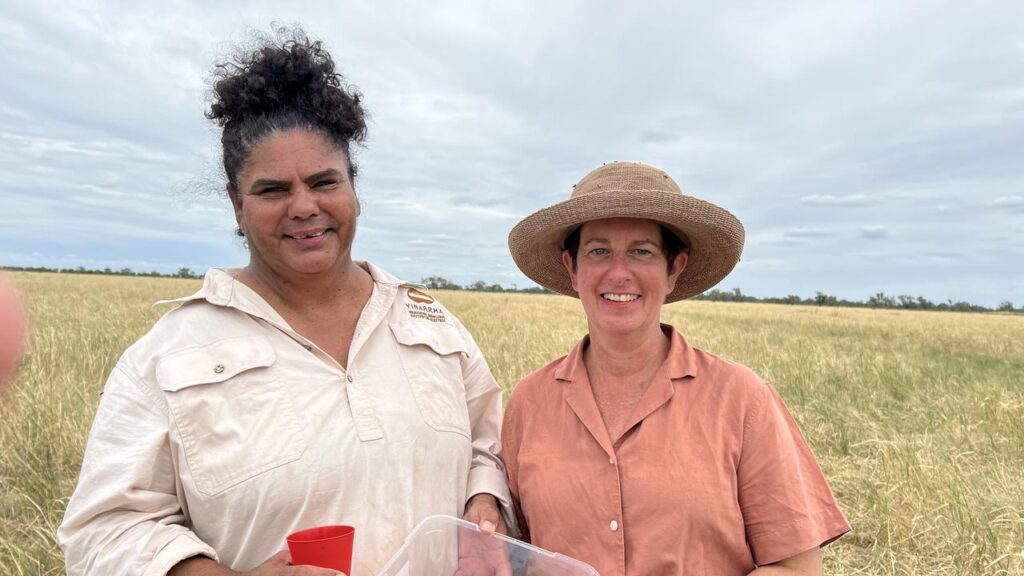
The smell of native grasses brings Kerrie Saunders back to her childhood.
Ganalay and guli grasses thrived around Moree, NSW when she was a child, growing around the banks of the Mehi River.
It was when Ms Saunders, a Kamilaroi woman, was involved in a native grain project with the University of Sydney that she was struck by the power of this smell.
“I was threshing (the grain) and I had to submerge it in water and it was a smell that hit me,” she said.
“I knew that smell in my heart … I’d smelled this all my life, it was growing in abundance all around the Mehi, where I lived and where I played.

Taking this experience a step further, Ms Saunders worked with Griffith University historian Margaret Cook to record oral histories based on the smell of native grasses as a memory trigger.
Ms Saunders and Dr Cook had 19 Kamilaroi women smell a cup of wet guli, triggering stories of childhoods spent playing along the river banks, swimming and fishing.
The women also recalled the impact of modern irrigation practices, water extraction and the use of pesticides and fertilisers on the health of the river and the native grasses.
“It was actually once irrigation came in and they started really churning up the land to introduce wheat and then more recently cotton that you really see the demise of these grasses,” Dr Cook said.
“They’re now only really growing on reserves or on farmland that people have consciously redeveloped these grasses.”
Traditionally, gathering grasses was women’s work, and this knowledge is often missing from the story, as most of the early contact with Aboriginal people was with male scientists and explorers, Dr Cook said.
For the 19 women involved in this project, it was an empowering experience to revisit these memories and be part of the effort to restore this knowledge.
“By rejuvenating these grasses and starting to grow to cook these foods we reinvigorate women’s culture,” Dr Cook said.
“They were seriously proud eating the scones and cakes that Kerrie had made.”

For Ms Saunders, who has been running cultural workshops and bush tucker tours through her business Yinarr-ma since 2020, the hope is to continue to share this knowledge.
“Culture was never lost, it was just asleep and it’s a beautiful feeling knowing they (the grasses) are still there, the same species the Old People worked with,” she said.
“Connecting people back to your food source and knowing what they are is healing.
“These species tell a story and you’re part of it.”
Dr Cook said this project is one of the most rewarding things she’s done because she’d learned so much from the women involved.
There’s an opportunity now for non-Indigenous people to learn about Indigenous cultures in a sustainable and tasty way, she said.
AAP