Hair traces on brick thwart wife-killer’s new bail bid
Rex Martinich |
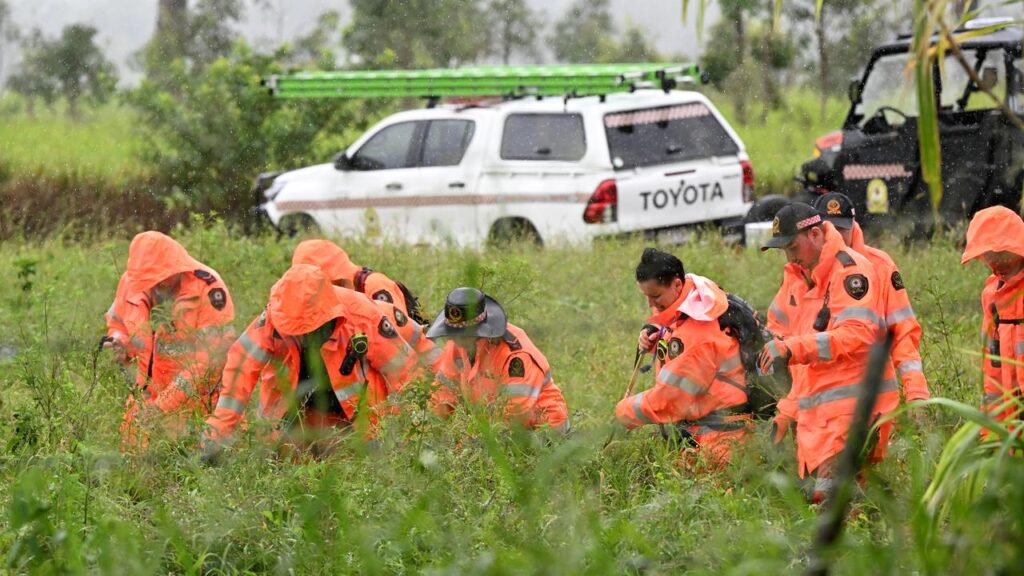
A man accused of killing his wife and making it look like a tractor-powered lawnmower accident has been denied bail after new forensic evidence from a potential murder weapon.
Yadwinder Singh, 46, was charged with murdering his wife Amarjit Kaur Sardar, 41, and interfering with her corpse after an incident on their farm at Woodhill, south of Brisbane, in February 2024.
Ms Sardar was discovered two metres from the tractor’s vegetation slashing attachment with both legs amputated.
Singh sought bail again on Tuesday in Queensland Supreme Court, with his solicitor Andrew Bale arguing there had been a material change in circumstances.

Prosecution evidence had weakened in two key ways between Singh’s first bail application in November 2024 and his committal hearing in October, Justice Rebecca Treston heard.
“The Crown maintains (Singh) killed his wife by bludgeoning her over the head with something and then in an effort to conceal his murderous intent he ran over her with the tractor,” Mr Bale said.
“Now that we have conducted a committal hearing, the Crown cannot point to a murder weapon.”
Forensic experts had testified that the alleged murder weapon, a brick, had been found 46 metres from the scene and Singh’s DNA was not on the object.
Singh told police he had arguing with his wife before he got into the tractor and unwittingly reversed the vehicle towards her with the slasher running.
Blunt force trauma to the head from a brick or a rock was no longer considered the sole cause of Ms Sardar’s death, Justice Treston heard.
“(Forensic pathologist) Dr Beng Ong said there was a combination of 25 injuries that are most likely to have caused death,” Mr Bale said.
“The pathologist conceded those injuries could have been caused by the machinery itself, the framework of the tractor implement … that’s an important difference.”
Singh faced a long wait on remand as the case would likely not make it to trial until 2027, Mr Bale said.
But crown prosecutor Samantha O’Rourke said the evidence from the committal is not as significant as the defence argues.
“It has never been the case that Dr Ong identified the specific weapon or implement, simply that the injuries were the result of blunt trauma,” she said.
“If anything, the case is now stronger given the results of the hair (on the brick) that were obtained since the previous bail application.”
Singh’s claims for a change in circumstance were “simply not made out,” Justice Treston found.
“Two samples taken from the brick reveal a single contributor, being the deceased in terms of her blood and her hair,” Justice Treston said.
“The jury might still conclude that is consistent with the brick having been used to bludgeon the deceased to death.”
There was also other evidence such as alleged prior strangulation, Justice Treston found.
“There is the statement (Singh) is said to have made to his cellmate about having killed his wife,” Justice Treston said.
She refused Singh’s bail application.
AAP