Asian floods toll surges past 1300, millions displaced
Binsar Bakkara |
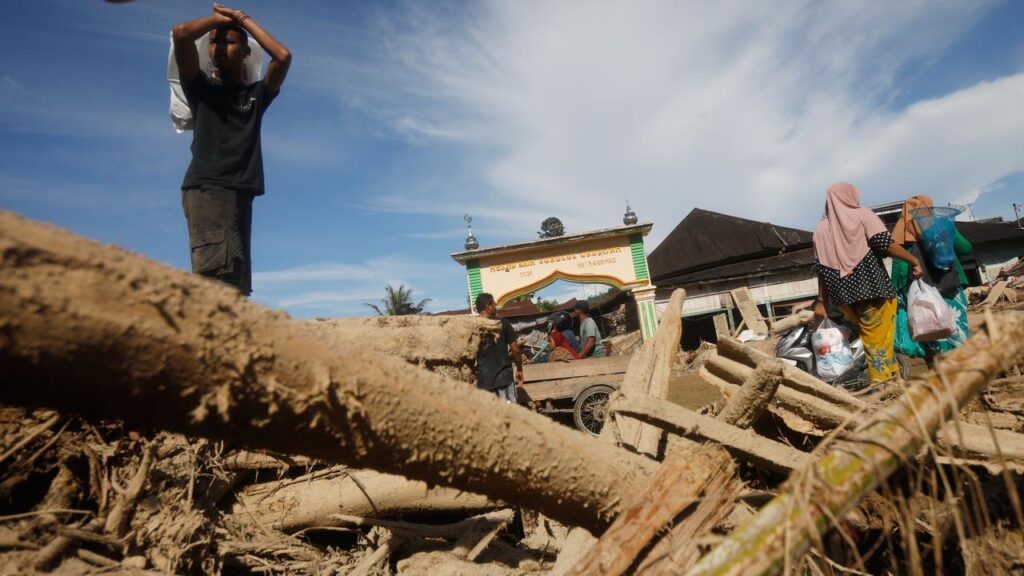
Emergency crews are racing to reach survivors as the death toll from catastrophic floods and landslides surged past 1300 in Indonesia, Sri Lanka and Thailand – with nearly 1000 people missing.
Days of heavy monsoon rains inundated vast areas, leaving thousands stranded and many clinging to rooftops and trees waiting for help.
The flooding and landslides killed at least 1303 people, with 753 people confirmed dead in Indonesia, 410 in Sri Lanka and 181 in Thailand, officials said.

In Indonesia, the hardest-hit nation, rescuers struggled to access villages on Sumatra island, where roads have been washed out and bridges collapsed.
At least 650 people remain missing, according to the country’s National Disaster Management Agency.
Helicopters and boats have been deployed, but officials warn that worsening weather and damaged infrastructure are slowing operations.
Floods and landslides in North Sumatra carried away millions of cubic metres of felled timber, officials said, sparking public concern that illegal logging may have contributed to the disaster.
Batang Toru, the lush forested area, has turned into a wasteland of broken logs and shattered homes. Roads have vanished, replaced by rivers of sludge.
“This is not just a natural disaster, it’s a man-made crisis,” said Rianda Purba from the Indonesian Environmental Forum, an activist group.
“Deforestation and unchecked development have stripped Batang Toru of its resilience. Without urgent restoration and stricter protections, these floods will become the new normal.”
A week after flash floods and landslides swept through West Sumatra, survivors were still awaiting news of their loved ones still unaccounted for.
Zahari Sutra held photos of his missing wife and two daughters aged four and two, as he pleaded for help with rescuers in Sikumbang village in Agam district.
“Other victims have been found … why not my family?”
The 38-year-old farmer said he dropped his motorbike and ran for higher ground when rising waters blocked his path to home last Thursday.
He said the raging current swallowed his home. He waded through the water shouting for his wife and daughters, but there was only silence.
As darkness fell, he found his eldest, a five-year-old girl, covered in mud, but safe. Fearing more floods, Sutra clung to a lychee tree with his daughter until dawn, when the full scope of the disaster was revealed: all homes were gone or buried under tonnes of mud.
Military-led rescue teams in Sri Lanka scoured flood-devastated areas for 336 people still missing in the aftermath of Cyclone Ditwah, the Disaster Management Centre said.
Roads were blocked by landslides and bridges have collapsed, making access difficult.
In Kandy, residents struggled without running water, relying instead on bottled water collected from natural springs. Authorities warned that conditions could worsen as more rain is forecast in the coming days.
President Anura Kumara Dissanayake described the disaster as the worst to strike Sri Lanka in recent history, saying it remains impossible to determine the full scale of casualties.
He warned the death toll is likely far higher than current figures.
He said government agencies were working to reach isolated communities.

In southern Thailand, clean-up has begun on streets and in buildings after massive floods affected more than 1.5 million households and 3.9 million people.
Authorities are working to restore infrastructure, including water and electricity.
Thailand’s Interior Ministry said it would set up public kitchens to provide freshly cooked food to affected residents.
The first batch of compensation payments is set to be distributed to 26,000 people, government spokesperson Siripong Angkasakulkiat said.
PA