Rural nurses ‘let down’ by health report
Jack Gramenz |
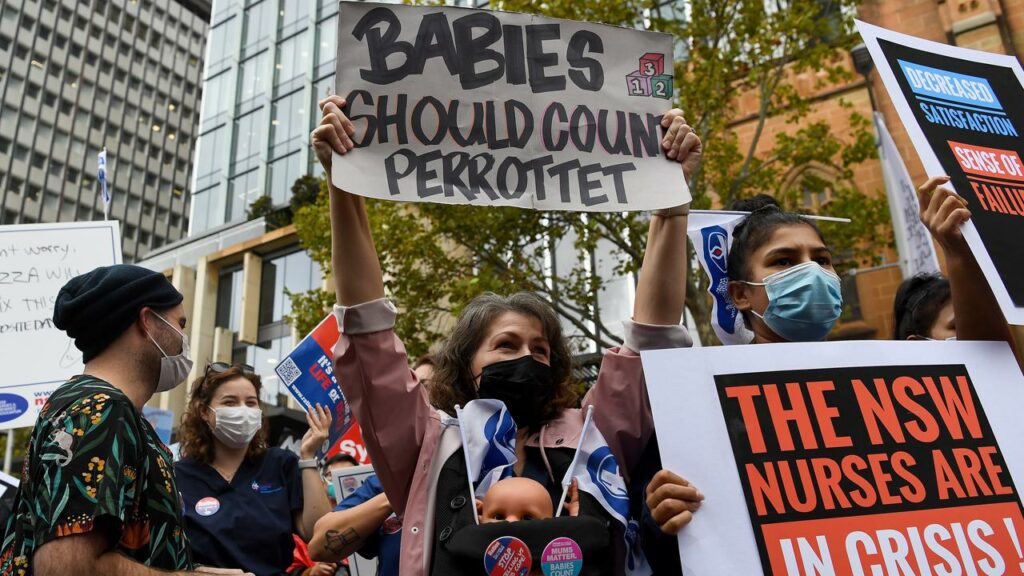
NSW nurses and midwives are no closer to securing more staff to reduce their workload, with an inquiry into health care in rural areas declining to recommend mandated nurse-to-patient ratios.
Crossbench members of the parliamentary committee that conducted the year-long upper house inquiry into rural, regional and remote health have criticised the government and opposition for voting against the recommendation.
Nurses and midwives went on strike in March, calling for mandated nurse-to-patient ratios.
Health Minister Brad Hazzard said Labor voted against recommending ratios despite leading the union to believe it was supporting them.
“This is a major backflip and what it shows is they’ve been telling porkies and when it comes to the crunch they’ve now done a major, major turnaround,” he told Sydney radio 2GB on Thursday.
Opposition Leader Chris Minns previously said taxpayers would expect his party to scrutinise the costs of mandating ratios before it promised to do so.
Expensive policies like nurses are calling for need to be considered and scrutinised in the context of the budget situation, Mr Minns said, not dictated by the Greens moving an upper house amendment one afternoon.
Past Labor leaders had taken ratio policies to the last two state elections but voters would expect the party to scrutinise those old policies before making another commitment.
“Primarily because we didn’t win those elections,” Mr Minns said.
Premier Dominic Perrottet said there were already mandated ratios for nursing hours per patient.
“The form of nurse-to-patient ratios that the union are advocating for actually creates more problems in the health system,” he said on Thursday.
“When nurses are sick under that ratio, wards have to close.”
Nurses are also seeking pay rises above the 2.5 per cent cap on public sector wages, in line with other frontline workers including public transport staff, and teachers who went on strike on Wednesday.
Mr Perrottet has previously indicated public sector wages would be addressed in next month’s state budget, while Mr Minns says if that is the case the government should tell workers now what will change after June 21.
Greens MP Cate Faehrmann, who pushed for ratios to feature among the inquiry’s 44 recommendations, said healthcare staff and patients had been let down.
“Nurses, midwives and their union know that ratios are essential to creating a safe workplace and ensuring the safety of their patients,” she said.
Chronic understaffing caused horrific situations, where understaffed regional hospitals sometimes had one nurse caring for dozens of patients.
“The solution to this problem must include safe nurse-to-patient ratios,” Ms Faehrmann said.
As a consequence, more nurses would resign and regional NSW hospitals would be even worse off, she said.
Independent Murray MP Helen Dalton said nurses in her border electorate were taking up better paid positions in Victoria rather than waiting for their recruitment processes to be finalised in NSW.
Committee member Emma Hurst of the Animal Justice Party voted to support Ms Faehrmann’s amendment to include ratios in the recommendations.
She said their omission was a major failure of the inquiry and it was disappointing the government and Labor did not support making the recommendation.
The inquiry report coincides with International Day of the Midwife, and the NSW Nurses and Midwives Association says many of them will spend the day grappling with staffing challenges.
“Highly skilled, professional midwives are flat-out trying to work in a broken health system and we’re seeing them reduce their hours or move interstate where conditions and pay is better,” the union’s assistant general secretary Shaye Candish said.
Queensland and Victoria have legislated nurse-patient ratios and South Australia is considering them.
AAP